Loading NuWatt Energy...
We use your location to provide localized solar offers and incentives.
We serve MA, NH, CT, RI, ME, VT, NJ, PA, and TX
Loading NuWatt Energy...
NuWatt designs, installs, and manages solar, battery, heat pump, and EV charger systems across 9 states. One company, one warranty, one point of contact.
Get a Free Quote
Deregulated ERCOT market, a $109.2M TCEQ All-Electric pool, and a hard Section 30C federal deadline of June 30, 2026. Here's how Texas businesses capture every dollar of incentive before the stack collapses — workplace, multifamily, fleet depot, and retail.
$109.2M
TCEQ All-Electric pool
30%
Section 30C with PWA
6
TDUs + muni utilities
Jun 30 2026
30C federal deadline

Stack three layers: (1) federal Section 30C — 6% base or 30% with prevailing wage — but only if placed in service by June 30, 2026 and sited in a qualifying census tract; (2) TCEQ All-Electric grant funding ($109.2M open FCFS through August 31, 2026, tied to vehicle/equipment replacement); and (3) your local utility program — Oncor Drive Forward, CenterPoint EV Make-Ready, AEP Texas, TNMP, Austin Energy, or CPS Energy. Design hardware for Texas heat (122°F ratings), hail (NEMA 4), and 4CP demand-charge exposure. Add NACS for Tesla-heavy corridors.
OBBB Act accelerated the federal charging credit sunset from 2032 to June 30, 2026. Chargers must be energized and placed in service before midnight — not just ordered. For a typical Texas permit + utility make-ready + interconnection sequence, Q1 2026 project starts are the realistic floor.
A fully installed Level 2 commercial station in Texas typically costs $5,000–$15,000 per port all-in — networked dual-port hardware, bollards, concrete, conduit, transformer-side make-ready, switchgear, permit, commissioning, and first-year network fees. DCFC pricing scales with power: $60,000 per port for a 50 kW station, $100,000–$140,000 per port for 150 kW, and $160,000–$220,000 per port for 350 kW dual-cable CCS+NACS pedestals.
Texas sites generally trend 10–20% more expensive than mid-Atlantic equivalents because of hail/heat enclosure upgrades, longer trench runs in low-density commercial pad sites, and the switchgear premium that ERCOT interconnection studies impose above 1 MW of aggregate charger load. The dominant cost categories are (1) electrical service upgrades, (2) trenching, and (3) utility-side transformer work. NuWatt's make-ready model pushes as much of that as possible into utility rebate programs.
Texas is a split market. The competitive ERCOT zone has four Transmission & Distribution Utilities (TDUs) that wire the poles but don't sell you electrons, plus two major municipally-owned utilities that run soup-to-nuts programs outside ERCOT's retail structure. Every program has its own cap, eligibility gate, and income/census-tract adder.
Because Texas is deregulated, your Retail Electric Provider (REP) does not run an EV rebate — all EV infrastructure dollars flow through the TDU or muni utility above. That matters when you're negotiating commercial rates because REP contracts often contain load-ratchet clauses that can eat your EV savings if you don't engineer around them.
Section 30C — the Alternative Fuel Vehicle Refueling Property Credit — is the only federal commercial EV credit standing in 2026. It's worth 6% of eligible property cost by default, or 30% if you meet the IRS prevailing-wage-and-apprenticeship (PWA) rules, capped at $100,000 per item (each charging port and each storage property counts as its own item).
Two Texas-specific gotchas. First, the charger must be placed in service on or before June 30, 2026 — this is the accelerated OBBB Act deadline, not the original 2032 sunset. That means practical design-build windows end by early summer. Second, the property must be located in an IRS-designated low-income community or non-urban census tract — NuWatt runs a GEOID lookup on the street address before we finalize the financial model. Tax-exempt buyers (cities, school districts, hospital districts, nonprofits) can elect direct pay to monetize the credit as cash.
For a detailed walkthrough of how 4CP transmission exposure ties into commercial energy strategy alongside EV charging, see our Texas 4CP demand-management playbook. For the full TCEQ program mechanics, continue to our TCEQ All-Electric 2026 deep dive.
Texas changes the hardware shortlist. Workplace and multifamily L2 sites need chargers rated for continuous 122°F ambient operation, NEMA 3R or NEMA 4 enclosures (NEMA 4X on Gulf Coast salt-air sites), and at minimum IK08 impact resistance on the pedestal. In practice that narrows the shortlist to ChargePoint CPF50, Blink IQ 200, EV Connect Galaxy, and the Tesla Universal Wall Connector on NACS-weighted sites.
DCFC deployments prioritize dual-cable pedestals (CCS1 + NACS) for 2026+ fleet/retail mix. ABB Terra 184 and Kempower C-Series are the most common Texas deployments because both vendors publish thermal derating curves that still deliver 120+ kW at Texas summer peak ambient. For MUD/MF billing and load management, SWTCH, Xeal, and EVPassport all have Texas deployments; Xeal's offline-first architecture is especially resilient on ERCOT black-sky days.
Heat-rated networked L2 stations plus Tesla-corridor NACS. All four clear TCEQ, Oncor Drive Forward, CenterPoint, and Austin Energy approved-products screening.
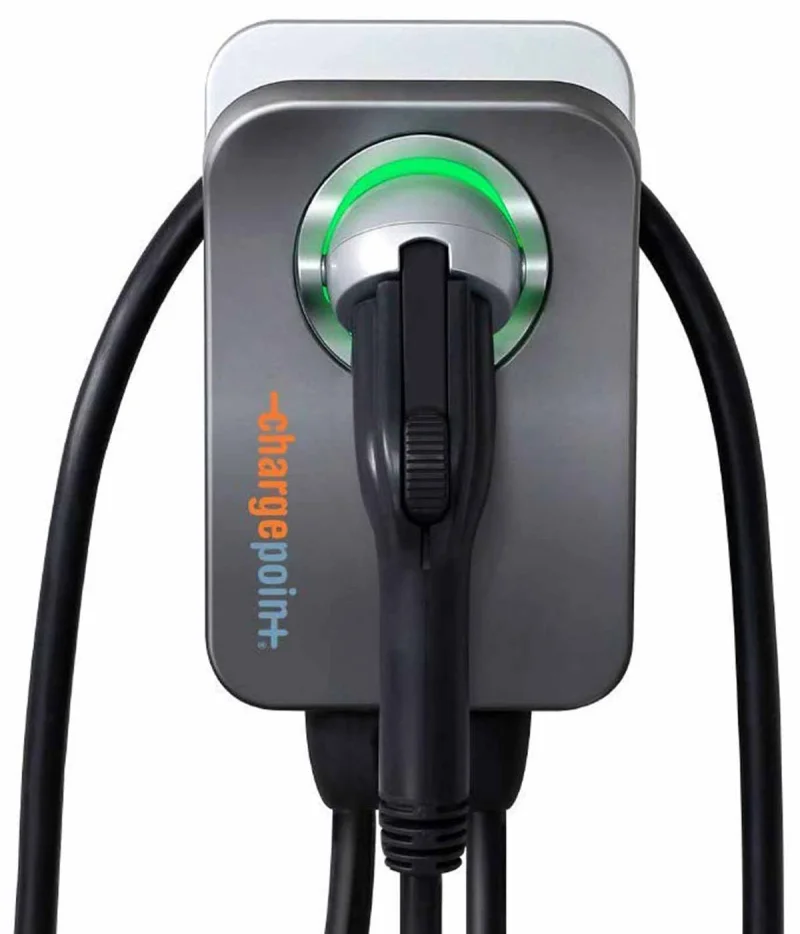
50A networked Level 2, OCPP firmware, session metering
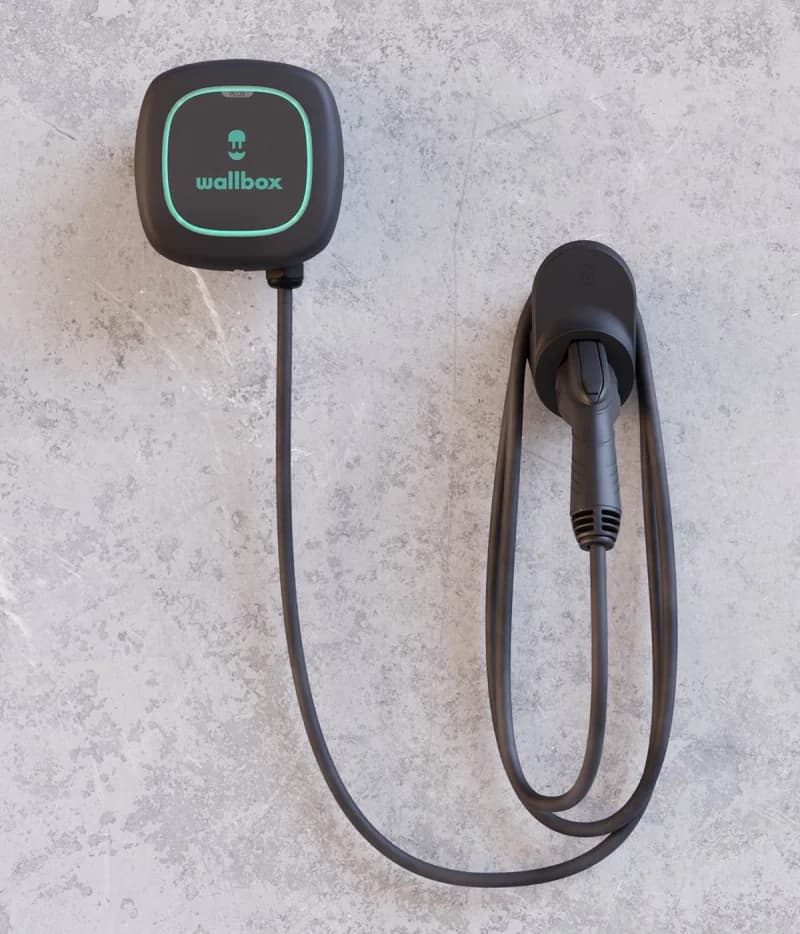
40–48A L2 with dynamic load balancing across 24 ports
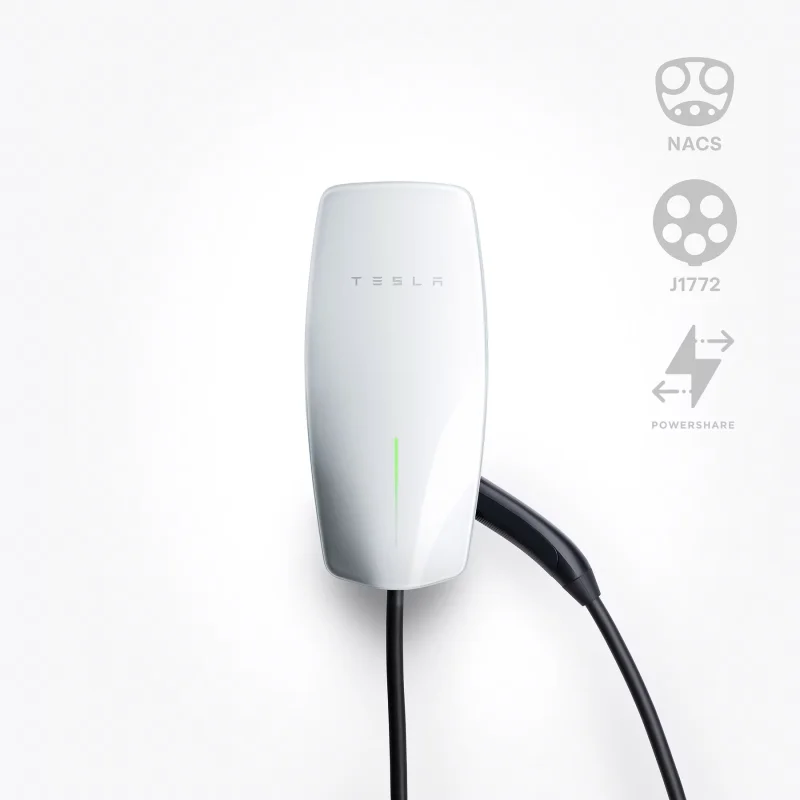
Native NACS plus J1772 adapter, 48A L2
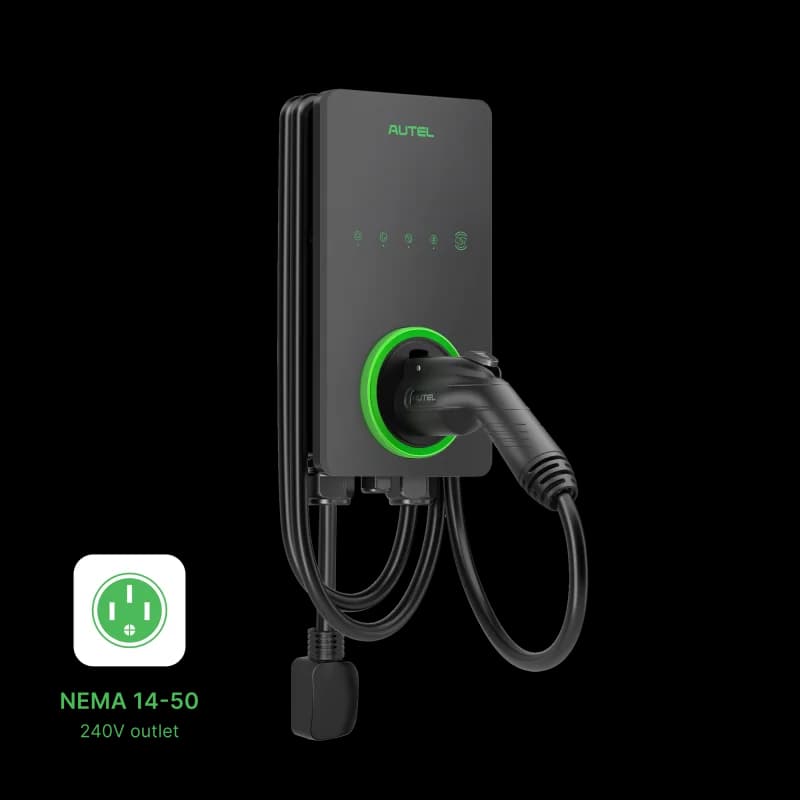
40–50A L2 networked, revenue-grade metering
The Texas environmental envelope breaks Northeast charger specs. North Texas hail can hit baseball size; Gulf Coast humidity averages 75%+ year-round; El Paso and Midland-Odessa hit 105°F air temperatures for 30+ consecutive days, which puts PCB-level chargers into throttle. NuWatt's Texas specification baseline is:
That carport/canopy angle matters for Texas specifically. See our solar carport + EV charging bundle for sizing and Section 48E stack math.
Tesla's Austin HQ presence plus the Gigafactory supply chain means Texas has one of the highest Tesla per-capita concentrations in the US, especially along the I-35 corridor from San Antonio through Austin to DFW and along the 183/71 corridors through Central Texas. For workplace and retail destination sites in these zones, specifying NACS is no longer optional.
NuWatt's default 2026 TX destination mix is 60–80% J1772/CCS1 (the industry-standard connector now shipping with NACS adapters) and 20–40% native NACS via Tesla Universal Wall Connector on L2 and native NACS cables on DCFC pedestals. We oversize the make-ready conduit by 25% so you can convert ports as the fleet mix shifts through 2027–2029.
The right charger count, tariff structure, and incentive mix depend on how the vehicles actually dwell on your property. Texas commercial hosts generally fall into four buckets:
Representative DFW-area 10 networked L2 ports in an Oncor zone + qualifying census tract. Your specific mix depends on PWA compliance, tract, and whether you pair TCEQ with a fleet replacement.
NuWatt models the full stack (census-tract verification, PWA compliance, 30C form 8911 mechanics) before anyone signs a contract. Every number above assumes your site qualifies — we walk that confirmation in a 30-minute consult.
Texas commercial EV charging installs typically run $5,000–$15,000 per Level 2 port all-in (hardware + make-ready + electrical + permitting), and $60,000–$180,000+ per DCFC port depending on power level (50 kW to 350 kW). A 10-port workplace L2 site in Dallas or Houston usually lands between $75,000 and $140,000 before incentives. TCEQ All-Electric funding plus utility make-ready rebates and Section 30C (6–30%) can offset 40–90% of that total on qualifying projects.
IRS Form 8911 & Section 30C
Alternative Fuel Vehicle Refueling Property Credit — 2026 guidance & filing.
TCEQ All-Electric Program
$109.2M Texas Commission on Environmental Quality grant pool through Aug 31, 2026.
Oncor — Drive Forward
North/West Texas TDU commercial EV rebate + make-ready program (2026).
CenterPoint Energy — EV Charging
Houston-area make-ready and workplace/fleet EV pilot tariff.
AEP Texas — Commercial EV
Central, South, Coastal TX commercial EV rebate documentation.
Austin Energy — EV Charging
City of Austin workplace, multifamily, DCFC rebate tiers.
CPS Energy — EV Programs
San Antonio commercial EVSE rebate and multifamily carve-outs.
ERCOT 4CP Methodology
Transmission cost recovery and coincident-peak rate mechanics.
Last verified by NuWatt Incentive Team on 2026-04-14. Incentive program terms change frequently — confirm current availability with each utility before signing a proposal.
NuWatt handles site assessment, TDU and muni rebate filings, TCEQ All-Electric applications, census-tract verification, PWA compliance, and turnkey install. Federal 30C deadline is June 30, 2026.