Loading NuWatt Energy...

We use your location to provide localized solar offers and incentives.
We serve MA, NH, CT, RI, ME, VT, NJ, PA, and TX
Loading NuWatt Energy...
NuWatt designs, installs, and manages solar, battery, heat pump, and EV charger systems across 9 states. One company, one warranty, one point of contact.
Get a Free Quote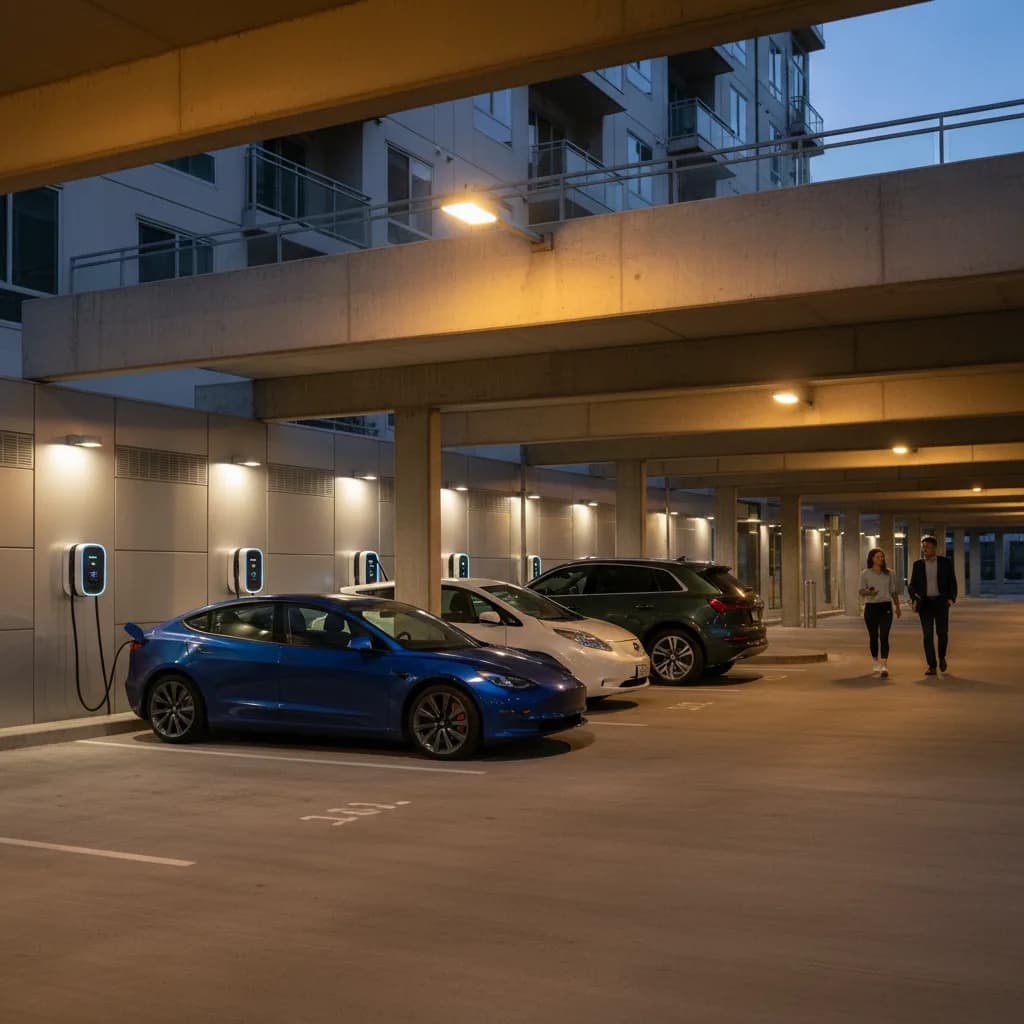
Turnkey Level 2 charging for MUDs. We stack utility make-ready and state rebates so your board is not writing a blank check.
$60K–$600K
Typical project range
8–40
Ports per site
90–240 days
Contract to energized
Built in
Resident billing + load mgmt
A turnkey multifamily Level 2 EV charging project costs $60,000 to $600,000, typically $6,000 to $15,000 per port surface-lot and $10,000 to $22,000 per port in underground garages. After utility make-ready and state rebates, net cost to the association often drops 40 to 70 percent. The federal Section 30C credit expired June 30, 2026 — chargers placed in service by that date can still be claimed on Form 8911.
The window to submit a complete application — load letter, permit-ready design, and selected network — closes July 15, 2026. After that date, or whenever the $166M pool exhausts, the rebate drops or disappears.
We spec each MUD site from this short list. Every model below supports dynamic load management, OCPP, and resident billing via a network integration.
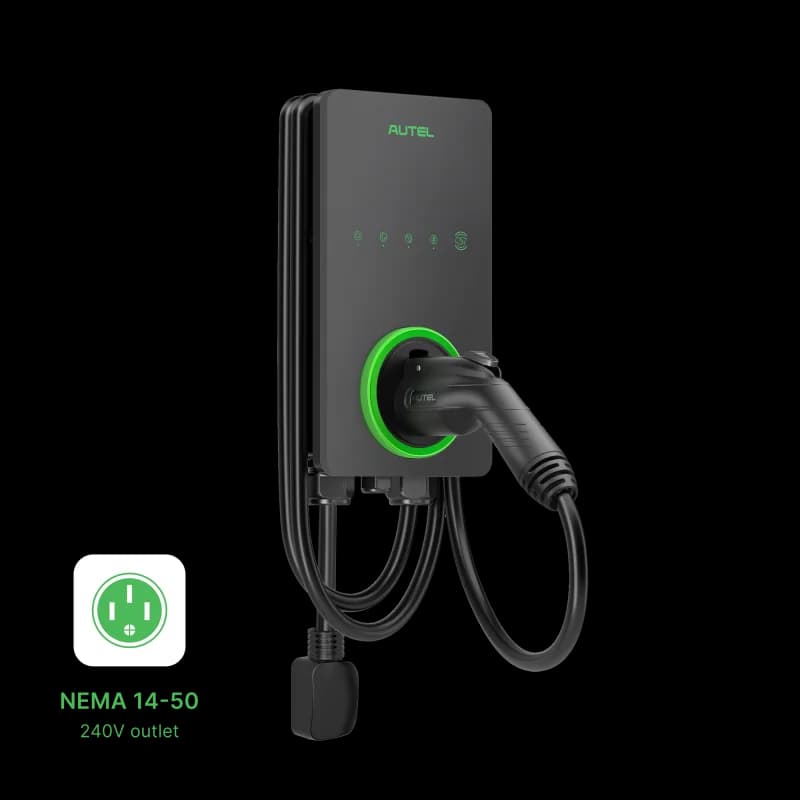
Up to 80A (19.2 kW), dual-port variant, OCPP 2.0.1
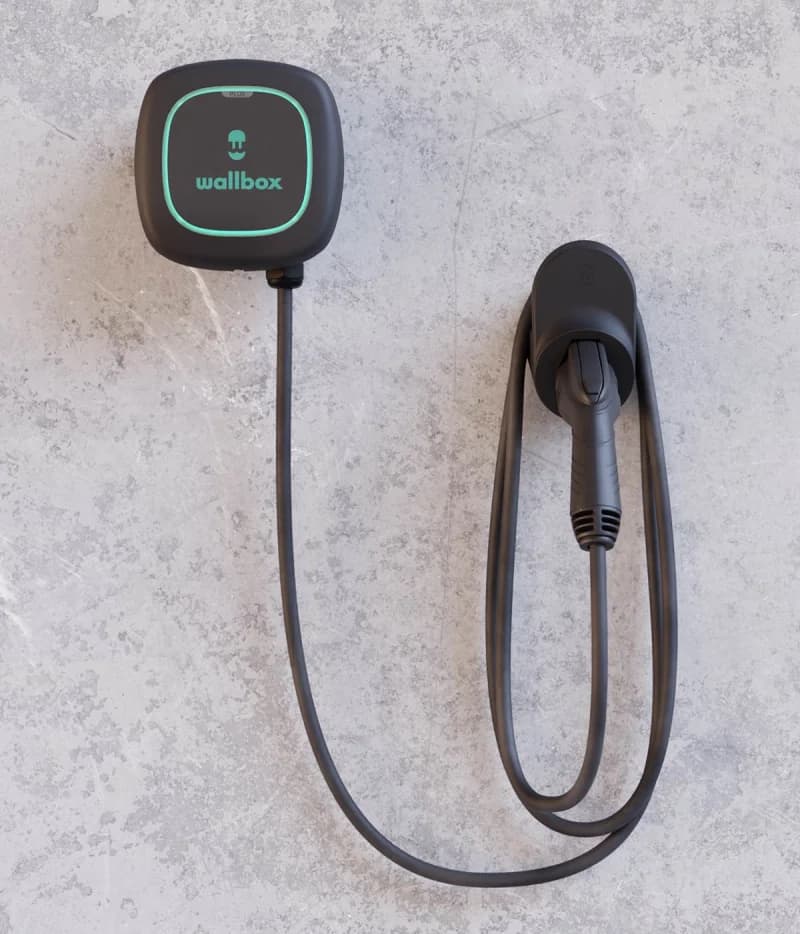
Up to 48A (11.5 kW), Power Boost load balancing, MID meter option
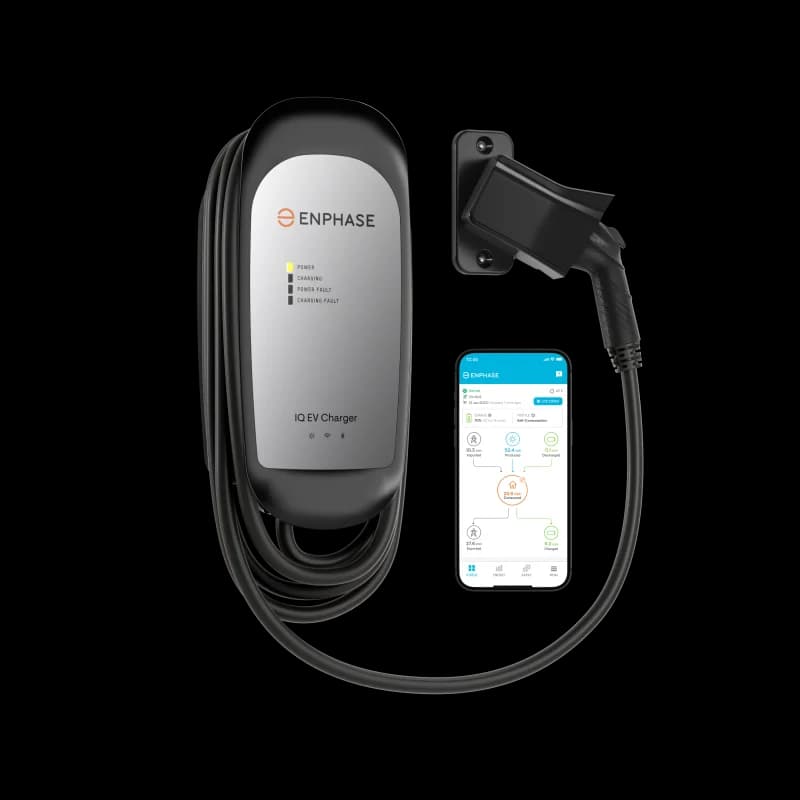
Up to 48A, integrates with Enphase solar + battery monitoring
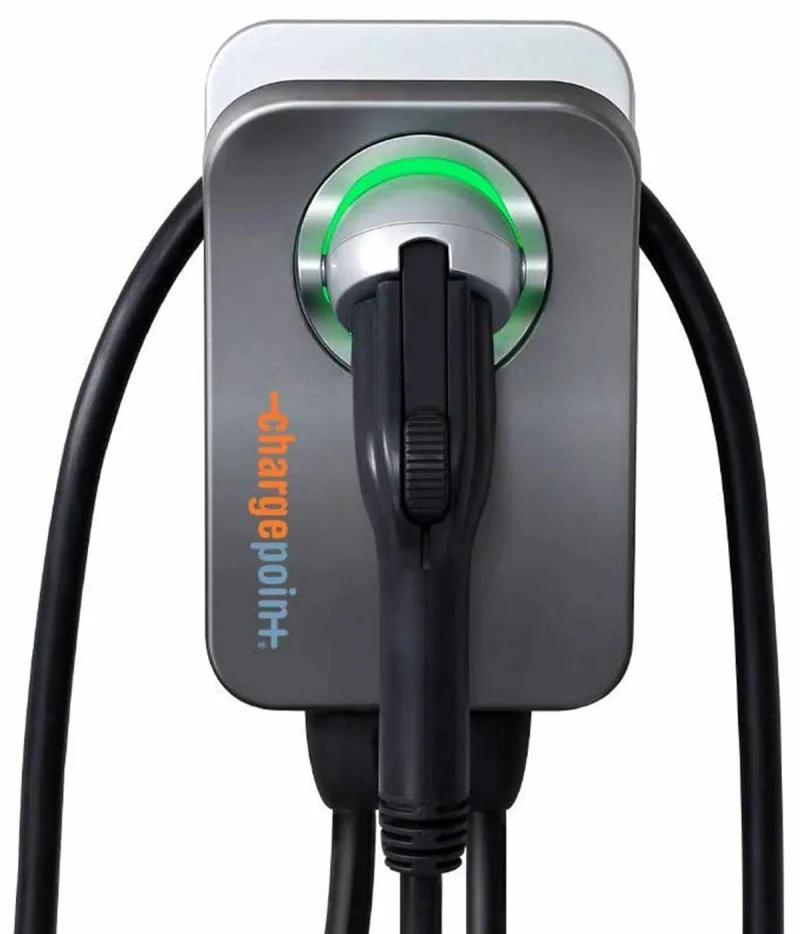
Up to 50A, ENERGY STAR, network flexible (CP + OCPP)
Hardware pricing shown is MSRP range before volume discounts and NuWatt install bundling. Final spec and network pairing is site-dependent.
The three MUD-native networks for resident billing + load management. Pick by billing model, garage signal, and payment UX.
Revenue-grade resident submetering on master-metered buildings
SWTCH app + property integrations (Yardi, RealPage)
Master-metered condos, DR revenue appetite
Offline Bluetooth auth — no cellular/Wi-Fi per charger
Flat monthly per-port, predictable opex line
Underground garages with no signal
Apple Pay / Google Pay tap-to-charge, no app download
Open payment, per-kWh or per-session
Mixed-use buildings, visitor-heavy sites
Massachusetts MassEVIP + Eversource/National Grid + Section 30C with PWA (chargers placed in service by the June 30, 2026 expiry). Net-to-association drops 60–87% depending on site.
Scenarios assume MA MassEVIP MUD + Eversource/National Grid make-ready. Numbers shift in NJ (PSE&G), CT (Energize CT), TX, and PA. The 30C layer applies only to chargers placed in service by June 30, 2026 (the credit has expired) and requires an eligible census tract + PWA.
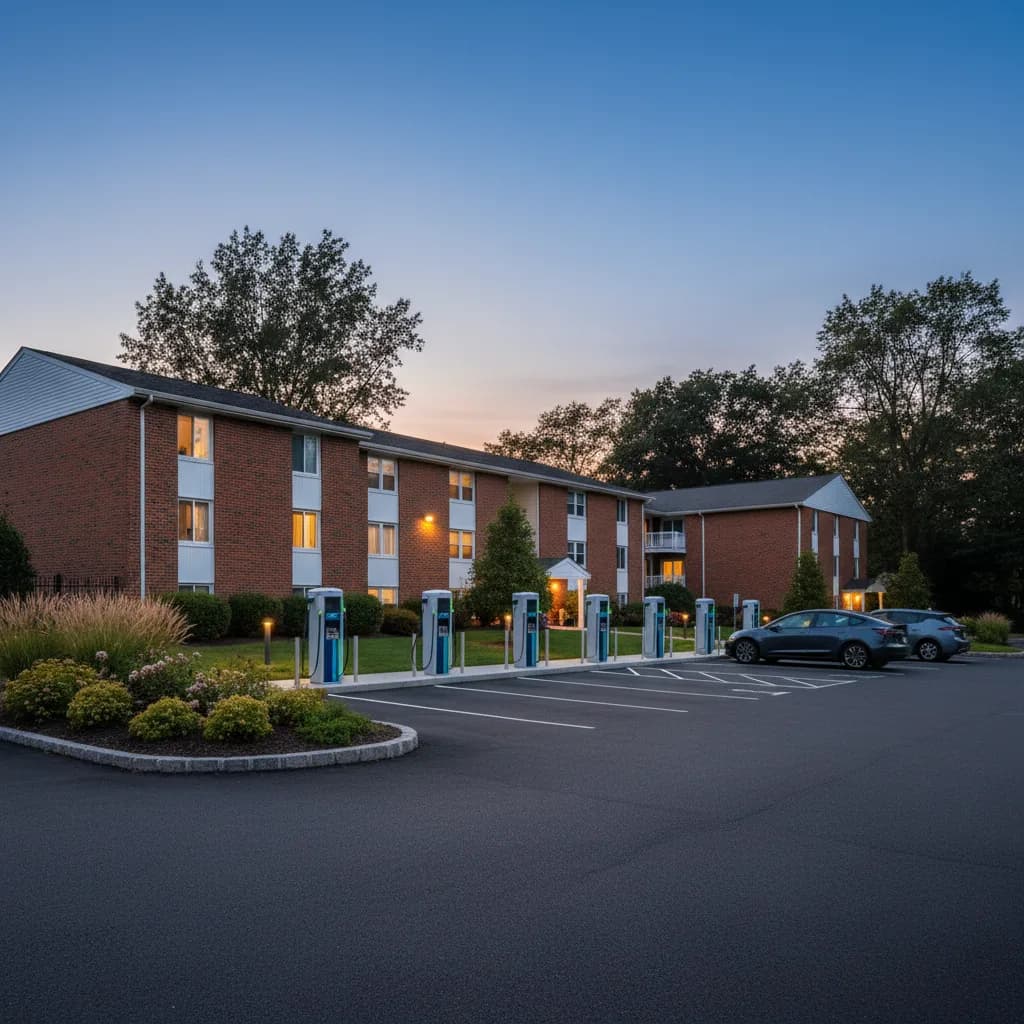
220-unit Class-A high-rise in Newark. 18 ports across resident garage and visitor lot. $234K gross → $71K net to ownership after PSE&G make-ready, per-port rebate, and the since-expired 30C credit.
10-page board briefing: problem statement, rebate math for your utility, network comparison, vendor SLAs, liability allocation, reserve-study impact. We customize it for your building before presentation.
Multifamily EV charging is not a one-line number. It is a stack: hardware, network fees, installation labor, conduit and trenching, switchgear, permitting, commissioning, and ongoing operations. For a typical 150-unit condo or apartment in New England or the Mid-Atlantic, a 10-port Level 2 deployment comes in at roughly $90,000 to $140,000 before rebates. A 25-port expansion on a single service runs $180,000 to $320,000. A 40-port garage retrofit with trenching and a transformer touch can hit $450,000 to $600,000. The number that ends up on the association balance sheet, however, is dramatically smaller once the rebate stack is applied.
The single biggest cost-driver is trenching and conduit. An open surface lot with the electrical room on the same side is cheap. An underground garage on the opposite side of the building, with post-tension slab and no sleeves, is expensive. The second driver is service capacity: if the building already has 400 amps of spare, load management lets you add ports without a utility upgrade. If the main service is maxed out, a panel swap or transformer upgrade adds $50,000 to $200,000 unless the utility covers it through a make-ready program.
| Site size | Gross installed cost | Utility make-ready credit | State rebate (typical) | Section 30C (30%) | Net to association |
|---|---|---|---|---|---|
| 10-port Level 2 (surface) | $110,000 | $39,000 | $50,000 | $6,300 | ~$14,700 |
| 25-port Level 2 (mixed) | $275,000 | $97,500 | $50,000 | $38,250 | ~$89,250 |
| 50-port Level 2 (garage) | $580,000 | $195,000 | $50,000 | $100,500 | ~$234,500 |
Scenarios assume MA MassEVIP MUD plus Eversource/National Grid make-ready. Numbers change in NJ (PSE&G), CT (Energize CT), TX, PA, and other utility territories. The Section 30C figure applies only to chargers placed in service by June 30, 2026 (the credit has expired) and assumes the site sat in an IRS-designated low-income or non-urban census tract and met prevailing-wage-and-apprenticeship rules.
There is no single right network. There is a right network for your billing model, your cellular coverage, and your board's risk appetite. Below is how we position the three MUD specialists plus one workplace hardware line that we often pair with a specialty network.
SWTCH is the most MUD-native of the three. It was built to solve revenue-grade resident submetering in master-metered condo and apartment buildings, a situation that breaks most generic networks. SWTCH also has native integrations with property management systems, utility demand response programs, and multiple hardware OEMs (it is network-agnostic on the charger side). We recommend SWTCH for buildings with a single master meter, for boards that want ConnectedSolutions or similar managed-charging revenue, and for sites where you need open-standard OCPP portability in case the board later wants to switch.
Xeal is the concrete-garage answer. Its apollo protocol authenticates sessions over Bluetooth so the charger itself does not need cellular or Wi-Fi, which is a huge advantage in underground parking where signal is non-existent. Xeal's commercial model is typically flat per-port monthly with unlimited sessions, which many boards prefer because it is a predictable operating-budget line instead of a variable fee. Xeal hardware is bundled, so you commit to their chargers.
EVPassport's differentiator is payment. Residents or visitors can tap Apple Pay, Google Pay, or a credit card on the charger itself without downloading an app. This matters for mixed-use buildings where retail or visitor parking needs to be first-time-friendly. EVPassport hardware is modular (swap the contactor without replacing the whole head) and they push hard on uptime SLAs.
For boards that want a well-known brand at the charger but need MUD-style resident billing, we sometimes deploy ChargePoint CP6000 hardware on the CP network for workplace-visible stalls and pair it with SWTCH or Xeal on the resident stalls. CP6000 is dual-port, supports dynamic load management, and is widely serviceable. It is the safest hardware choice if the board later wants to switch networks — the OCPP pathway is clean.
The reason EV charging is suddenly affordable for MUDs is that no single party pays for all of it. We build a layered funding stack:
This is the single most confused area of multifamily EV tax planning — and since Section 30C expired June 30, 2026, it matters only when claiming chargers that were placed in service by that date. The answer depends on the legal structure of the ownership entity. Most residential condo associations file IRS Form 1120-H as a homeowners association, which taxes only non-exempt function income and has limited tax liability, making direct 30C utilization impractical. Most HOAs file Form 1120 as a regular C-corporation, which is better for 30C because the full credit can offset ordinary income tax on exempt-function activities.
When the association could not efficiently use the credit, the project structure flipped: a third-party network owner (for example a turnkey operator) owned the chargers, monetized the 30C credit, and passed a chunk of the savings back to the association as lower install pricing or lower operating fees. If the building is owned by a for-profit LLC, as most rental multifamily is, the LLC claims 30C directly on Form 8911 for chargers placed in service by the expiry, and the credit reduces its federal tax liability dollar for dollar.
Tax-exempt entities — religious campuses, non-profit senior living, affordable housing sponsors, student housing foundations — can take 30C on pre-expiry installs as elective (direct) pay under IRA Section 6417, which means the IRS issues a refund check even with zero tax liability. We support direct-pay filings when the ownership is tax-exempt.
Your board should not take the above as tax advice. It is a project-structuring framework. NuWatt works with your CPA and counsel to confirm the final pathway.
Load management is the firmware and software layer that prevents a 20-port EV deployment from tripping the main breaker. Imagine ten cars all plug into 48-amp Level 2 chargers on a 200-amp subpanel. Without load management, the total draw would be 480 amps and the panel would trip within seconds. With dynamic load management, the controller senses real-time load and splits the available amperage across active sessions so no session exceeds what the panel can safely deliver.
Three types of load management are in market:
| State / Utility | Program | Coverage | Deadline |
|---|---|---|---|
| MA MassEVIP | Multi-Unit Dwelling | 60% / $50,000 per site | Open, funded annually |
| MA National Grid / Eversource | EV Make-Ready | 100% make-ready + $3,900/L2 port | Open |
| NJ PSE&G | EV Program multifamily | $11,100 make-ready + $6,700/port (up to 10) | July 15, 2026 or funds out |
| NJ JCP&L | EV Driven multifamily | Make-ready + per-port rebate | July 15, 2026 |
| CT Energize CT | Eversource / UI MUD | 50% EVSE + 100% make-ready; $5–$40/plug/month managed | Open |
| NY (context) | Make-Ready (not NuWatt territory) | Up to 100% make-ready — for reference only | Open |
NuWatt operates in Massachusetts, Connecticut, New Hampshire, Rhode Island, Vermont, Maine, New Jersey, Pennsylvania, and Texas. New York Make-Ready is listed for context because many multifamily owners have mixed-state portfolios and use the NY program as a reference point.
If you own multifamily property in PSE&G or JCP&L territory, this section is the most important one on the page. The combined $166 million multifamily pool was designed to run through July 2026. As of early 2026 it is oversubscribed. Projects that have not submitted a complete application by July 15, 2026 will either miss the program entirely or be deferred to an uncertain successor cycle at lower rebate levels. Because the utility application requires a signed load letter, a permit-ready electrical design, and network selection, the realistic deadline to start is 60 to 90 days earlier — early May 2026.
Boards in PSE&G footprint should be making a decision now. Every week of board deliberation is a week of potential rebate erosion. Call your NuWatt rep for a 30-minute PSE&G eligibility check before the next board meeting.
Boards usually approve EV charging when one committee member builds a clean 10-page briefing for the full board. The NuWatt Board Packet above is that briefing. It covers problem statement, rebate math for your actual utility territory, network comparison, vendor SLAs, liability allocation, and a sample reserve-study impact — customized for your building before your next board meeting.
Last verified by NuWatt Incentive Team on 2026-04-14. Program levels and deadlines can change; confirm with your NuWatt rep before final board vote.
A turnkey multifamily Level 2 EV charging project typically runs $60,000 to $600,000 depending on port count and trenching. Per-port all-in cost (hardware, network, switchgear, make-ready, labor, commissioning) is usually $6,000 to $15,000 for a surface-lot retrofit and $10,000 to $22,000 for underground garages with long conduit pulls. A standard 10-port Level 2 MUD deployment averages $90,000 to $140,000 before rebates. After utility make-ready and state rebates, net cost to the association often falls 40 to 70 percent; projects that placed chargers in service by June 30, 2026 could also claim the now-expired federal Section 30C credit on Form 8911.
We build the rebate stack, the board packet, and the installation. You approve once — we handle utility, permits, and resident onboarding.