Loading NuWatt Energy...

We use your location to provide localized solar offers and incentives.
We serve MA, NH, CT, RI, ME, VT, NJ, PA, and TX
Loading NuWatt Energy...
NuWatt designs, installs, and manages solar, battery, heat pump, and EV charger systems across 9 states. One company, one warranty, one point of contact.
Get a Free Quote
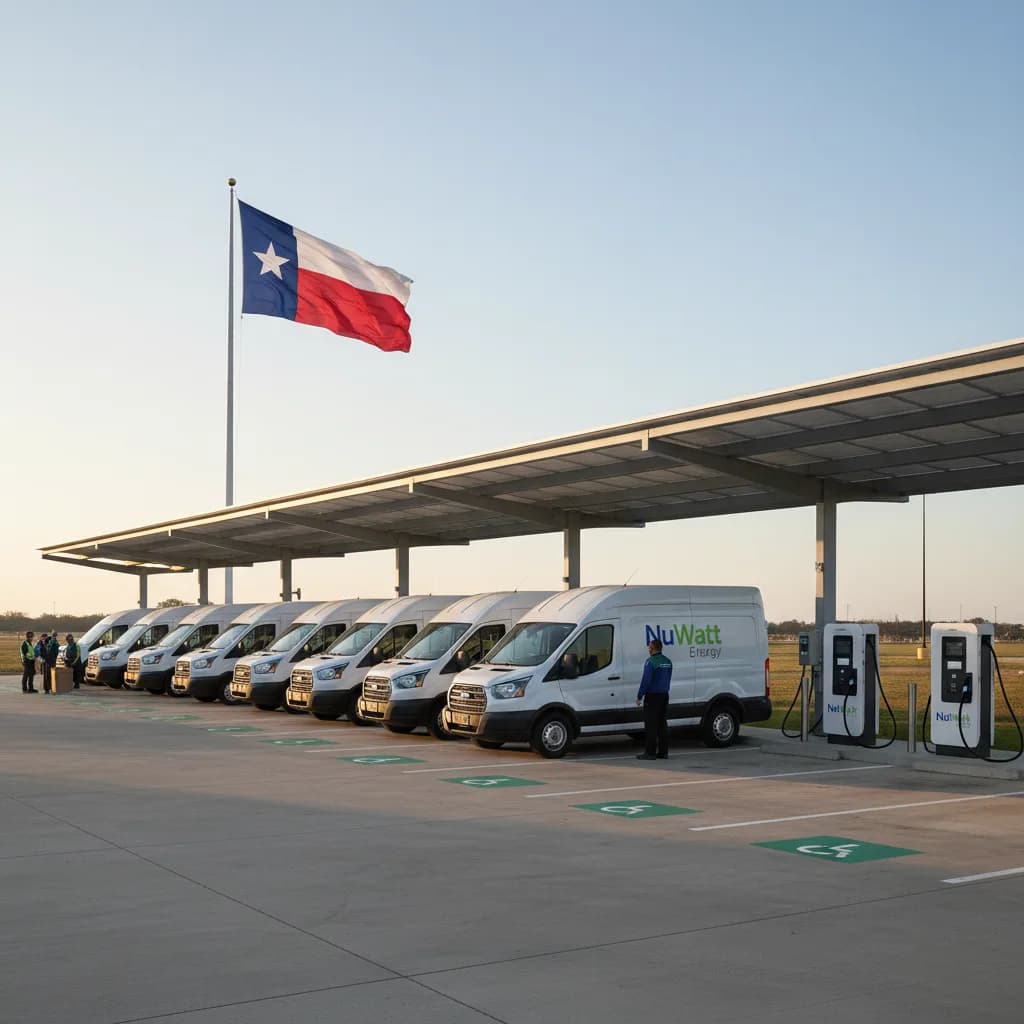
Overnight Level 2, DCFC turnaround, solar canopies, and battery-backed demand-charge mitigation — engineered for $150K–$3M+ projects across TX, MA, PA, NJ, and New England.
$150K–$3M+
Project Range
6–40
Typical Ports
120–300 Days
Delivery Cycle
48E + State + Utility
Stack
Fleet depot EV charging projects run $150K–$3M+ depending on port mix, utility upgrades, and whether a solar canopy is stacked. Section 48E covers the solar and storage, and state programs like TX TCEQ, MA MassEVIP, and PA AFIG stack on top. The federal Section 30C charger credit expired June 30, 2026 — chargers placed in service by that date can still be claimed on IRS Form 8911.
Fleet managers, operations directors, and CFOs running light-duty service, parcel, municipal, and school-bus fleets face a harder engineering problem than workplace charging. Demand charges, utility service upgrades, dwell-time sequencing, solar canopy siting, and managed-charging software all interact with the capital budget. One live federal credit (48E on the canopy and storage), one major Texas state grant (TCEQ All-Electric), and several utility programs reshape the net project economics — and depots that energized chargers by June 30, 2026 can still claim the now-expired Section 30C credit on Form 8911. This page is the engineering brief NuWatt walks every fleet buyer through before we quote.
$150K–$3M+
Project range
120–300 days
Delivery cycle
L2 + DCFC
Hardware mix
$109.2M
TX TCEQ pool
What an actual depot scope looks like by fleet composition. Port counts and power levels are starting points; every real design includes utility load study.
Estimated cost
$150K–$280K
Estimated cost
$420K–$750K
Estimated cost
$680K–$1.2M
The honest answer is that no single charger wins at every depot. The correct specification follows from vehicle count, dwell time, duty cycle, battery size, and the utility’s demand-charge structure. For overnight Level 2 — the workload of 80%+ of light-duty fleet ports — we default to the ChargePoint CP6000 in dual-port configuration. It runs 80A shared between ports, sits on the approved-products list for every state rebate program in our footprint, and integrates with most fleet telematics platforms.
For DCFC we specify the ChargePoint Express Plus, ABB Terra, or Kempower C-Series. ChargePoint is the default for customers already on their network. ABB Terra scales to 360 kW liquid-cooled dispensers and is common for larger logistics depots. Kempower’s modular satellite architecture is the right choice when a fleet needs to share a power cabinet across 4–8 dispensers at varying power levels. All three are rebate-approved in TX (TCEQ), MA (MassEVIP DCFC), and PA (AFIG).
Connector standards matter. J1772 still dominates light-duty fleet L2. CCS remains the default for DCFC in the US through 2026, with NACS adoption accelerating on new Ford, GM, Rivian, and Tesla light-duty fleet vehicles. We specify dual-standard DCFC dispensers (CCS plus NACS) on any project that will serve mixed-model fleets past 2027.
Overnight Level 2 is the backbone of virtually every successful fleet depot. A Ford E-Transit, a Rivian EDV, or a municipal Chevy Bolt-based inspection vehicle parked from 6 PM to 6 AM recharges fully on a 9.6 kW Level 2 port. Level 2 is cheaper per port (by roughly 10x), imposes no demand-charge penalty, and lasts longer mechanically. For 80–90% of light-duty fleet ports, the right answer is Level 2.
DCFC earns its place as a turnaround and rescue layer. Vehicles that come back low at shift change, a spare that needs to be ready in 45 minutes, or medium-duty step vans with larger packs that cannot finish on L2 overnight — these justify 50–150 kW DCFC. Medium-duty walk-in step vans (Freightliner MT45, Isuzu NRR EV) push the mix toward DCFC because they carry 150–200 kWh packs and may only have 8 hours of dwell. Heavy-duty drayage and regional tractor fleets are the one segment where DCFC (or MCS) dominates.
| Scenario | Dwell | Right charger | Per-port cost (all-in) |
|---|---|---|---|
| Light-duty overnight | 8–14 hrs | L2 @ 9.6 kW | $7.5K–$14K |
| Medium-duty overnight | 8–12 hrs | L2 @ 19.2 kW or low-DCFC | $15K–$35K |
| Turnaround / rescue | 30–90 min | DCFC 50–150 kW | $75K–$180K |
| Heavy-duty / regional | 2–4 hrs | DCFC 150–360 kW or MCS | $200K–$550K |
Fleet depot projects span a wide range, but the drivers are consistent: port count and type, utility service upgrade scope, civil work, and whether a solar canopy or battery storage system is bundled. A small light-duty depot with 6 Level 2 ports and modest electrical work lands near $150K. A mid-size parcel depot with 20 L2 ports and 4 DCFC dispensers typically runs $900K to $1.4M. A large logistics or utility fleet depot with 40+ ports, a solar canopy, and battery storage clears $2M and can exceed $3M in Texas where service upgrades at scale are common.
Utility upgrades routinely represent the single largest line item on projects above 1 MW of peak demand. Transformer replacement, primary-side conductor, and utility engineering fees can account for 20–35% of total project cost and 60–80% of schedule risk. NuWatt engages the utility within two weeks of contract signing to lock in the upgrade schedule and protect your incentive window. For TCEQ All-Electric applications in Texas, we pre-stage the application so the equipment order and utility application move in parallel once the award is issued.
They could — on the same depot, against different assets — for chargers placed in service by June 30, 2026, when Section 30C expired. Depots that hit that date can still claim both credits for the tax year the property went live. New solar-canopy-plus-charging builds now stack Section 48E with state and utility programs instead.
On a $2M fleet project with a 300 kW solar canopy that placed its chargers in service by the June 30, 2026 expiry, 30C on the $600K charger scope plus 48E on the $1.1M solar-plus-storage scope plus state incentives could bring the net cost below 50% of gross in several of our target states. The economics are not theoretical; they depend on PWA compliance, domestic-content sourcing, census-tract eligibility, and clean application timing. NuWatt manages all four.
Applied to $600K charger scope, capped at $100K per port.
Applied to $1.1M solar + storage scope. Domestic content adders available.
Varies by state and application. TX TCEQ ties to vehicle replacement.
Gross project
$2,000,000
Federal + state credits
≈ $560K–$810K
Net basis to fleet operator
≈ $1.19M–$1.44M
Illustrative only. Actual stack depends on PWA compliance, census-tract eligibility, domestic-content sourcing, and program availability on the date of application. The Section 30C line applies only to chargers placed in service by June 30, 2026.
NuWatt priority market
TCEQ All-Electric is first-come-first-served and committing faster than 2024. For TX fleet operators, the sequence is: TCEQ application, Oncor/CenterPoint utility engagement, and equipment order in the first 30 days — the grant pool is draining and transformer lead times at Oncor and CenterPoint are long.
Texas is NuWatt’s priority fleet depot market in 2026, and the reason is the TCEQ All-Electric Charging Infrastructure grant. The program committed $109.2M on a first-come-first-served basis and is accepting applications through August 31, 2026 or until funds exhaust. Funding is tied to vehicle or off-road equipment replacement, so fleets that are already retiring ICE trucks are the ideal applicants.
Layered on TCEQ, Oncor’s Drive Forward Texas program contributes Level 2 equipment and installation rebates in Oncor service territory (Dallas–Fort Worth, Waco, East Texas). CenterPoint Houston has historically run pilot programs, and AEP Texas territory covers the Rio Grande Valley and West Texas. Unlike New England, Texas has no statewide net-metering structure to lean on, so the fleet solar canopy play is driven purely by offsetting retail charging cost plus Section 48E.
For Texas fleet buyers, the ticking clocks are: TCEQ funds running out (pool is already committing faster than 2024) and long transformer lead times at Oncor and CenterPoint. NuWatt’s playbook is to submit the TCEQ application, engage the utility upgrade process, and place the equipment order in parallel within the first 30 days of engagement.
In Massachusetts, MassEVIP DCFC covers 80% of installed cost capped at $50,000 per station for publicly accessible or fleet DC fast chargers. MassEVIP Workplace & Fleet separately covers Level 2 up to 60% / $50K per address. National Grid and Eversource layer 100% make-ready plus $80K per DCFC port and $3,900 per L2 port on top.
Pennsylvania’s Alternative Fuels Incentive Grant (AFIG) operates on two 2026 cycles with deadlines April 1 and October 7, up to $300K per application and a $500K program maximum across multiple applications. AFIG requires at least two plugs at 7.2 kW concurrent. NuWatt runs both AFIG cycles in parallel for multi-depot PA fleets.
New Jersey’s PSE&G EV Program($166M) and JCP&L’s EV Driven program both close on July 15, 2026 or when funds exhaust. Fleet depots can access both make-ready allowances and customer-side rebates. Connecticut Eversource and United Illuminating fund 50% of EVSE equipment plus 100% make-ready under Energize CT, with managed-charging bonuses during the June–September demand season.
Fleet charging loads push most existing commercial services past their capacity. The upgrade scope depends on total depot peak demand and on whether you deploy battery storage. As a rough rule of thumb: below 250 kW peak, most existing services absorb the load with a new sub-panel. Between 250 kW and 1 MW, expect a secondary-side transformer upgrade and service entrance rework. Above 1 MW, primary-side work (new utility pole, primary feeder, sometimes a dedicated transformer) is typical.
Battery storage is not optional for high-DCFC sites in most tariffs — it is the economic difference between a profitable depot and an unprofitable one. A properly sized BESS can cut demand-charge exposure 60–80%, absorb DCFC peaks without drawing from the utility, and enable solar self-consumption. When combined with managed-charging software that sequences vehicles based on departure time and state of charge, a depot can deliver the same operational availability at a fraction of the demand-charge cost.
One DCFC session on a $20/kW-month tariff can add $3,000 in monthly demand charges. The three-layer playbook neutralizes the spike.
A properly sized BESS absorbs the DCFC peak, shaves demand 60–80%, and charges itself off-peak or from the solar canopy. Section 48E covers 30% when paired with solar.
Software sequences vehicles by departure time and state of charge. Peak demand drops without adding equipment. Integrates with Geotab and Samsara telematics.
Solar covers parking and offsets daytime load. Time-of-use scheduling pushes remaining charging to overnight windows. ConnectedSolutions pays per-kW in MA and CT.
Our overnight-L2 defaults plus the DCFC platforms we spec when turnaround time matters.
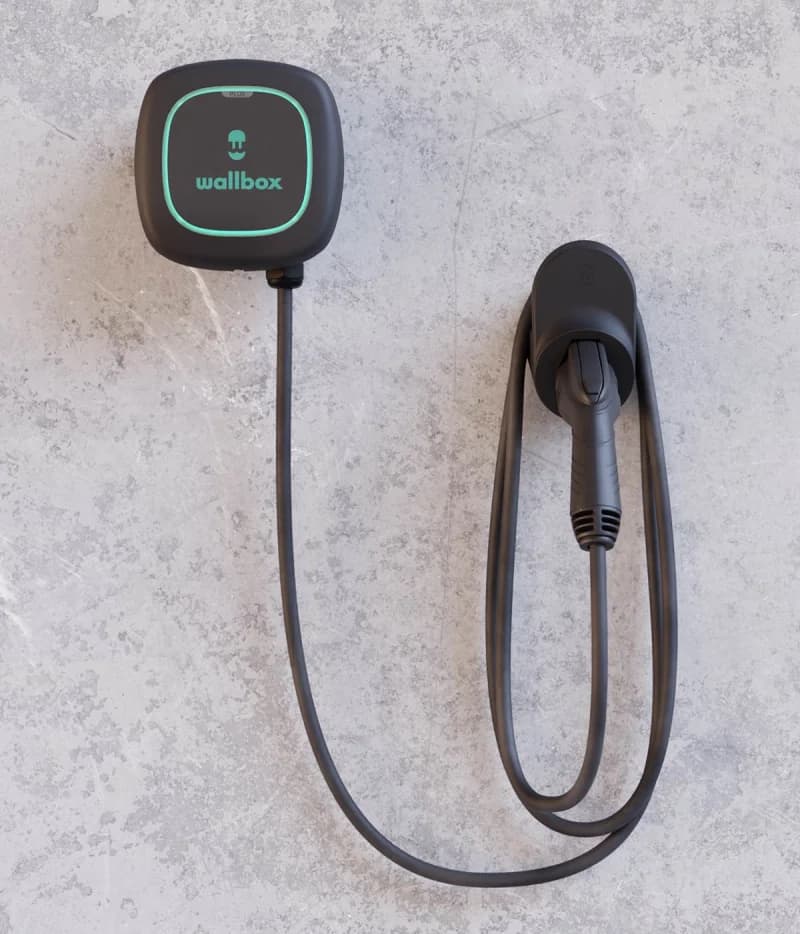
40A L2 with dynamic load balancing — fits most light-duty overnight cycles
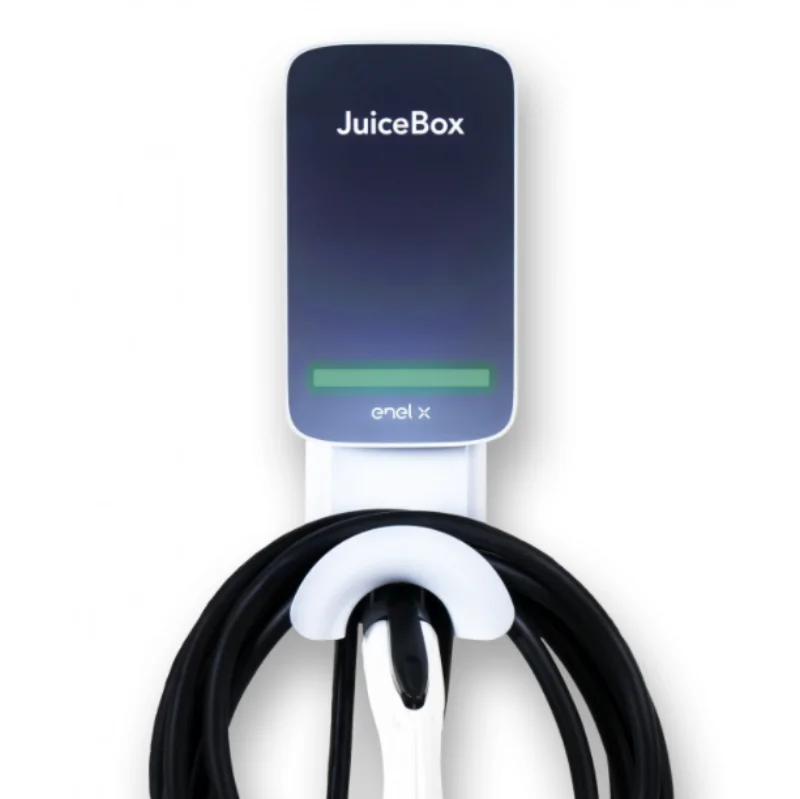
48A networked L2 for larger light-duty packs and medium-duty vans
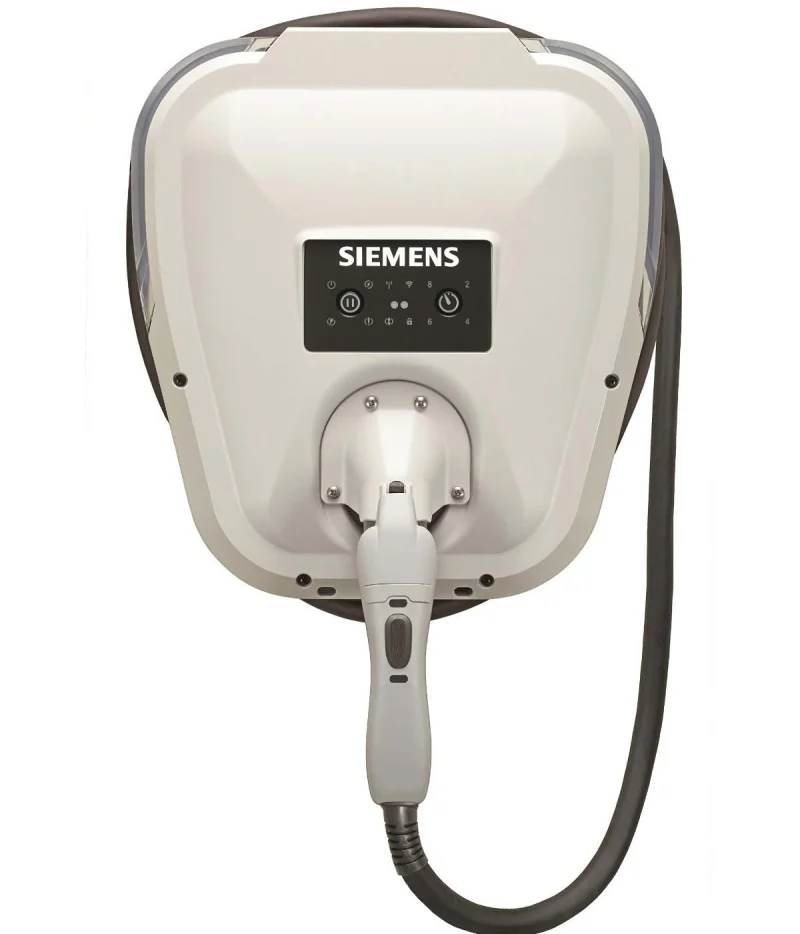
Ruggedized 40A Level 2 for industrial fleet yards and outdoor pedestals
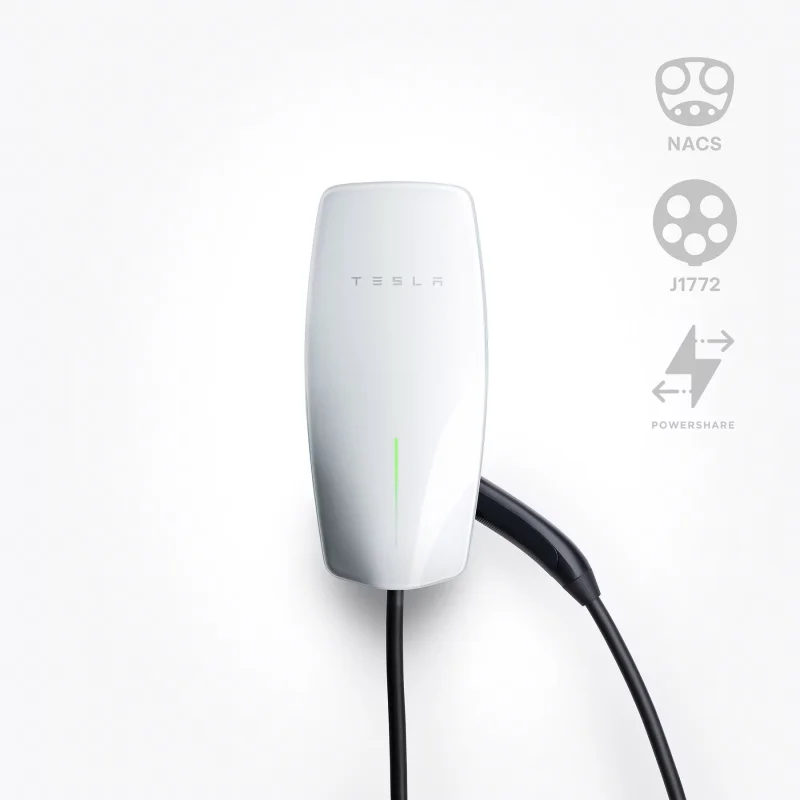
48A L2 with native NACS + J1772 adapter built in — mixed-fleet ready
For DCFC we specify ABB Terra (scales to 360 kW liquid-cooled) or Kempower C-Series (modular satellite architecture). Both are rebate-approved in TX, MA, and PA. We will publish dedicated PDP pages in our next wave.
Owns vehicle procurement, duty cycle, uptime requirements, and telematics integration. Drives port count, DCFC ratio, and equipment selection.
Coordinates facility, shift schedules, depot layout, and civil work windows. Often the executive sponsor on municipal and utility fleet projects.
Evaluates capital, approves incentive stack, reviews MACRS depreciation and Section 48E/30C filings. Owns the net-project-cost number.
One Level 2 port per vehicle is the baseline for light-duty parcel and service fleets that dwell 8 or more hours overnight. Add DCFC in a ratio of roughly 1:10 as mid-shift top-off or emergency rescue infrastructure. For mixed-use fleets that rotate the same vehicles across two shifts, we design closer to 1 port per 2 vehicles with managed sequencing and shared DCFC capacity.
IRS Form 8911
Alternative Fuel Vehicle Refueling Property Credit (Section 30C filing).
26 U.S.C. §§ 30C & 48E
Federal statutes — 30C expired June 30, 2026 (pre-expiry installs claimable on Form 8911); 48E base through 2032.
TCEQ All-Electric Charging Infrastructure
Texas Commission on Environmental Quality grant program guidance.
Oncor Drive Forward Texas
Texas Oncor EV Level 2 equipment and installation rebate program.
Massachusetts DEP — MassEVIP DCFC & Workplace/Fleet
State grant programs for DC fast charging and fleet Level 2.
National Grid & Eversource MA
EV charging make-ready tariffs including $80K/DCFC port funding.
Pennsylvania DEP AFIG
Alternative Fuels Incentive Grant 2026 cycle ($300K/app cap).
PSE&G NJ — EV Charging Program
NJBPU docket EO18101111 — $166M program tariff.
EnergizeCT EV Charging
Eversource and United Illuminating joint business EV program.
Last verified by NuWatt Incentive Team on 2026-04-14. Incentive amounts and deadlines change frequently; we re-verify every page monthly.
TCEQ is committing fast and transformer lead times are long. Let NuWatt sequence the utility, the incentive applications, and the equipment order — so your fleet lands on time.