Loading NuWatt Energy...

We use your location to provide localized solar offers and incentives.
We serve MA, NH, CT, RI, ME, VT, NJ, PA, and TX
Loading NuWatt Energy...
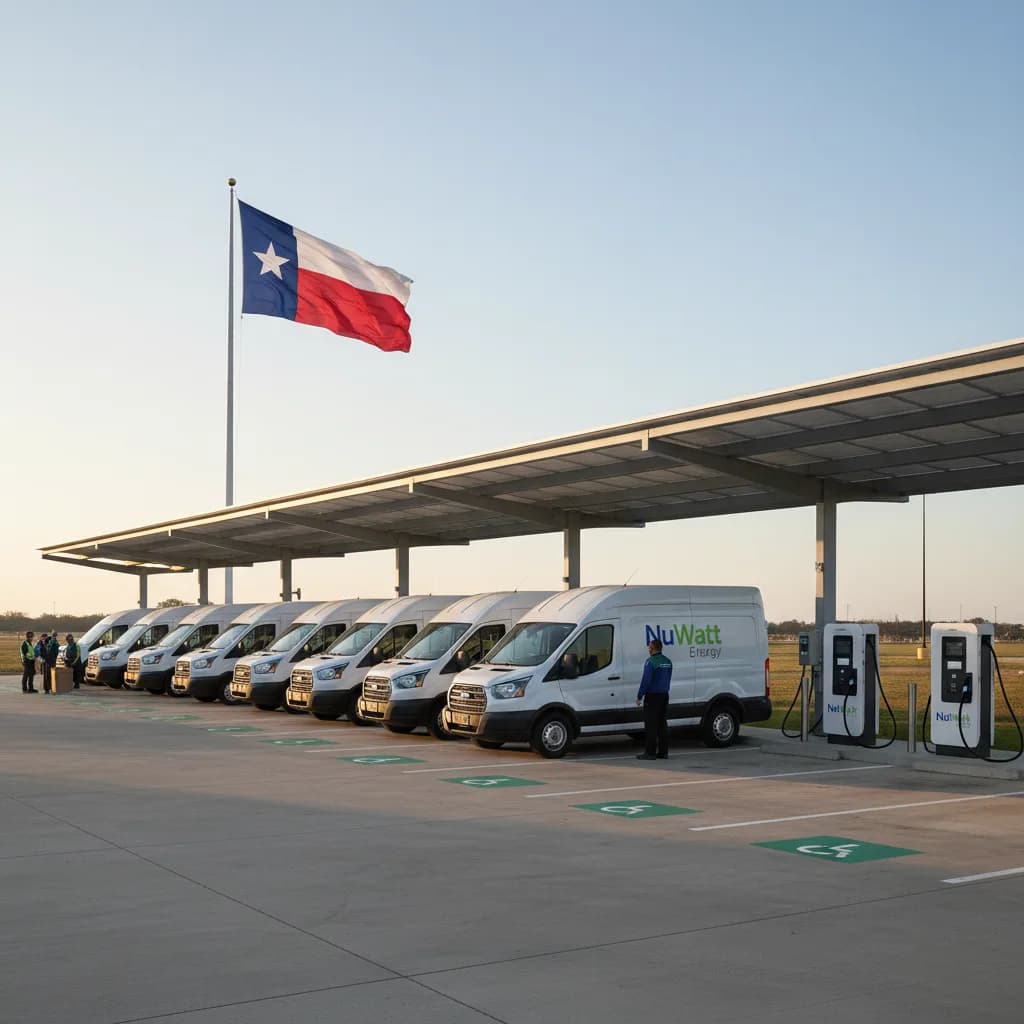
NuWatt designs, installs, and manages solar, battery, heat pump, and EV charger systems across 9 states. One company, one warranty, one point of contact.
Get a Free Quote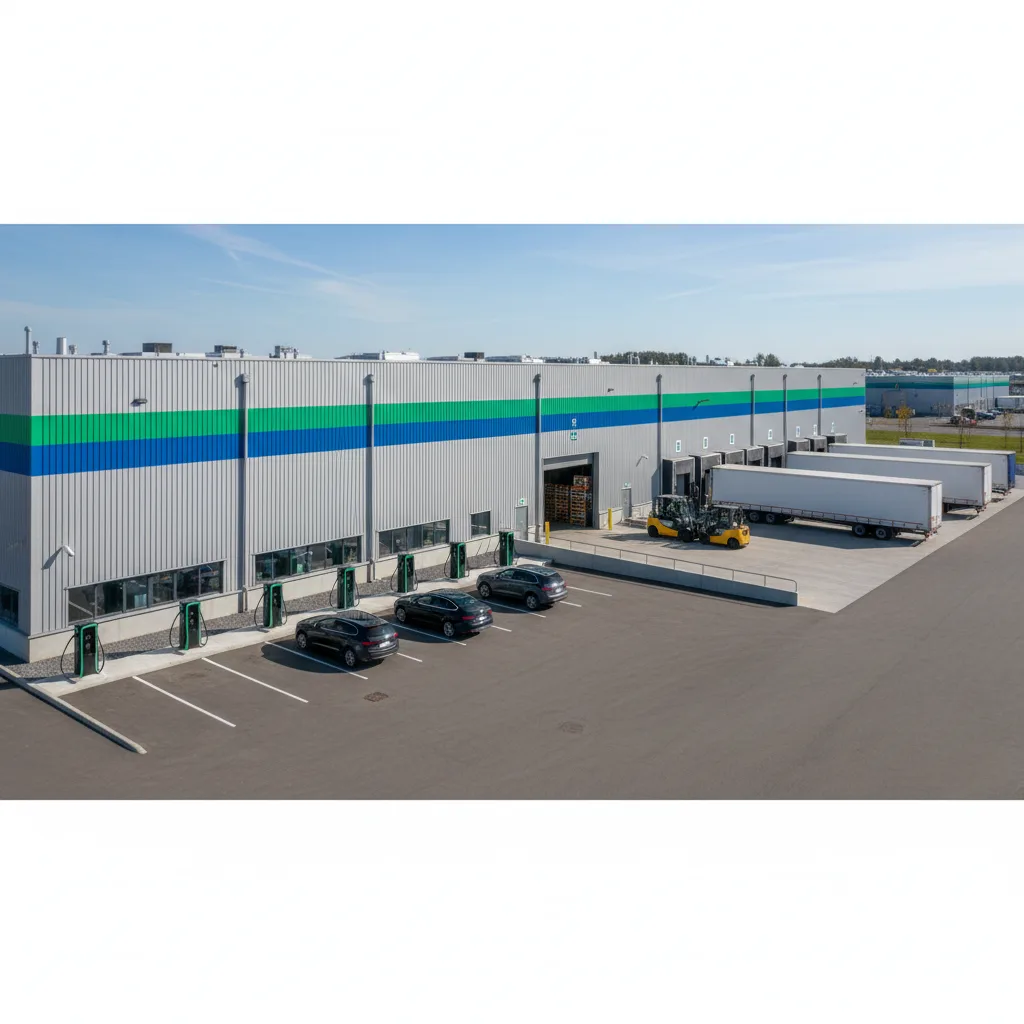
Design cars, forklifts, batteries, and solar onto one service entrance. Kill your demand peaks. Stack state grants, utility make-ready, and MACRS on one contract.
$100K-$1.5M
Project Range
90-210 Days
Install Cycle
30-60% of Bill
Demand-Charge Share
EV + Forklift + Battery + Solar
Bundle
Warehouse and light industrial EV charging runs $100,000 to $1.5 million per site. Level 2 clusters average $7K-$12K per port installed; DC fast chargers run $85K-$175K per port. Pair with battery storage and networked load management to avoid utility demand-charge tiers, then stack MACRS depreciation and state utility make-ready rebates from MassEVIP, PSE&G, PA AFIG, or Oncor Drive Forward. The federal Section 30C charger credit (6% base / 30% PWA, $100K/port cap) expired June 30, 2026 — chargers placed in service by that date can still be claimed on Form 8911.
$100K–$1.5M
Project range
90–210 days
Install cycle
Battery + Solar
Demand-charge bundle
No local SEO winner
Whitespace
A warehouse EV charging project today runs between $100,000 and $1.5 million per site, and the single biggest lever on that range is not the charger brand. It is the utility side of the meter.
Roughly 40–60% of warehouse EV project cost lands in service upgrades, trenching, transformer work, switchgear, and make-ready conduit. DCFC is a different category entirely: 150 kW DCFC units run $85K–$175K per port installed; 350 kW stalls can cross $250K.
10 ports, networked, load-managed, 40A circuits on a dedicated subpanel.
$150K–$275K
Cars plus Class I opportunity forklift chargers, shared service with controller.
$275K–$600K
1–2 DC fast ports, 250–500 kWh battery, solar canopy optional.
$600K–$1.5M
Warehouse EV projects fail when the electrician quotes chargers in isolation. NuWatt engineers all four load types behind a single load-management controller so the utility meter only ever sees a smoothed, demand-capped profile.
10–30 networked L2 ports for employee and light-duty vehicles, rate-limited by the load controller.
Class I opportunity chargers run continuous shift-change peaks of 400–750 kW on the same service.
250–1,000 kWh behind the meter — discharges during peak intervals so the meter never sees the spike.
100–400 kW over employee parking — offsets daytime load directly, doubles as snow and rain cover.
Net result
Integrated load management — the meter never sees a demand spike during any charging event.
Electrically, yes — both run on 480V three-phase service. Operationally, sharing a panel without active load management is a bad idea because forklift opportunity charging and car L2 charging both want the morning and end-of-shift peak.
A fleet of 20 Class I electric forklifts with opportunity chargers can pull 400–750 kW during shift change. Add ten L2 cars at 11.5 kW each and you have just pushed your 15-minute integrated demand reading into a tier that resets your tariff for the next twelve months.
The fix is a networked load controller that holds the entire EV load under a rolling kW ceiling. When forklift demand climbs, car chargers drop to 4 kW each. When forklifts go idle overnight, cars ramp back to 11.5 kW and finish by morning.
Warning: If your electrician proposes a simple subpanel with no networked load management, get a second quote. Every summer NuWatt replaces six to eight of these installs because the operator got a $5,000 demand bill and realized the charger software does not talk to anything.
“We were quoted $40,000 for a transformer upgrade before we realized a $28,000 battery and a load controller would do the same job. One good engineering hour saved us six figures over ten years.”
— Plant manager perspective, Northeast distribution center (illustrative)
Demand charges are the portion of your utility bill billed per kilowatt of peak instantaneous draw. For most light industrial accounts, they represent 30–60% of the total bill. Here is how NuWatt neutralizes them in three stacked layers.
15-minute interval analysis on utility AMI data. We map every forklift shift-change, compressor startup, and HVAC ramp to the minute. Most sites have 20–40 avoidable peak events per month.
A 250–1,000 kWh behind-the-meter battery discharges into the EV load during peak intervals. The meter sees a flat profile. The battery recharges overnight off-peak for pennies per kWh.
Rooftop and canopy solar generate midday, exactly when HVAC and EV load peak. Solar directly reduces the meter reading in the same 15-minute interval. Double-dip the canopy for Section 48E ITC.
Eversource NSTAR G-3 (MA) and PSE&G LPL (NJ) charge $15–$19/kW/month. A single unmanaged EV event can lift your monthly bill by $500–$2,500 with no corresponding kWh savings.
Oncor, CenterPoint, AEP, and TNMP allocate transmission cost via Four Coincident Peak. Your Jun–Sep peak sets your transmission rider for all of next year. Battery pays back on 4CP alone.
Industrial environments punish consumer-grade hardware. These four units are our 2026 defaults for warehouses, distribution, and light manufacturing.
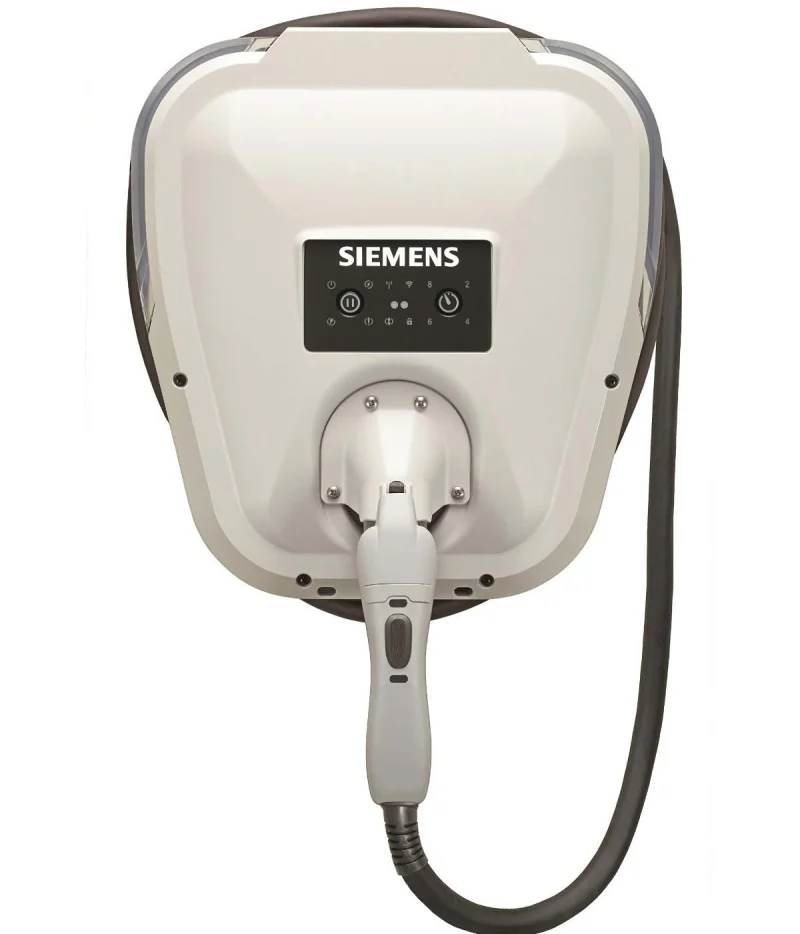
30–48A networked Level 2 built for 24/7 duty cycles and harsh environments
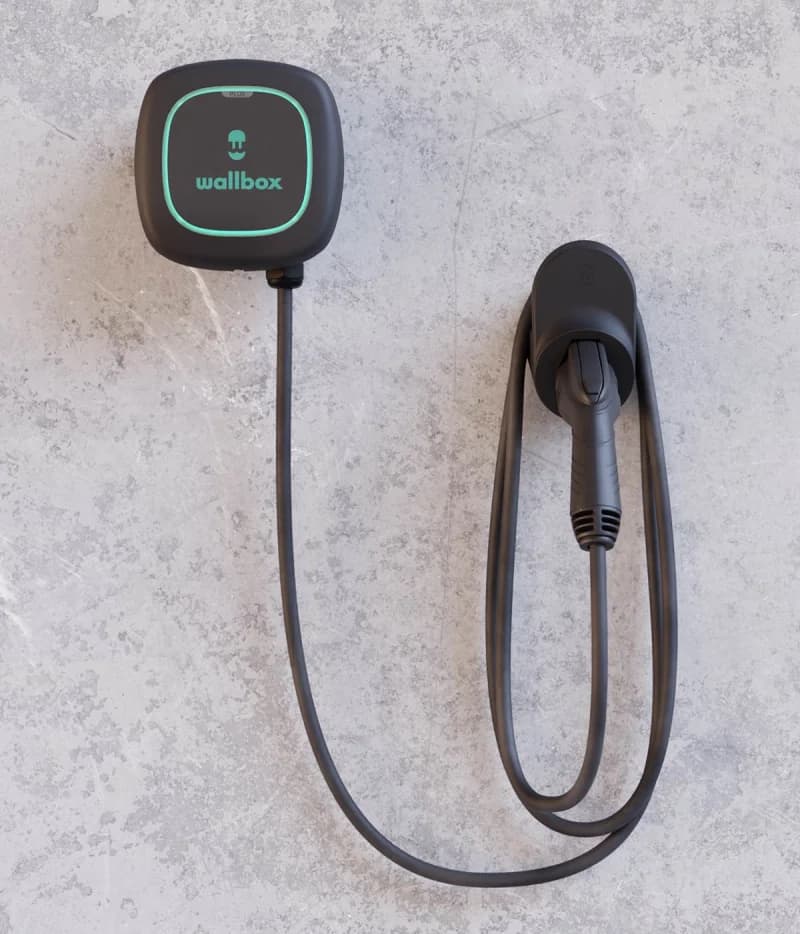
40–48A L2 with DLM across up to 24 ports — forklift-aware throttling
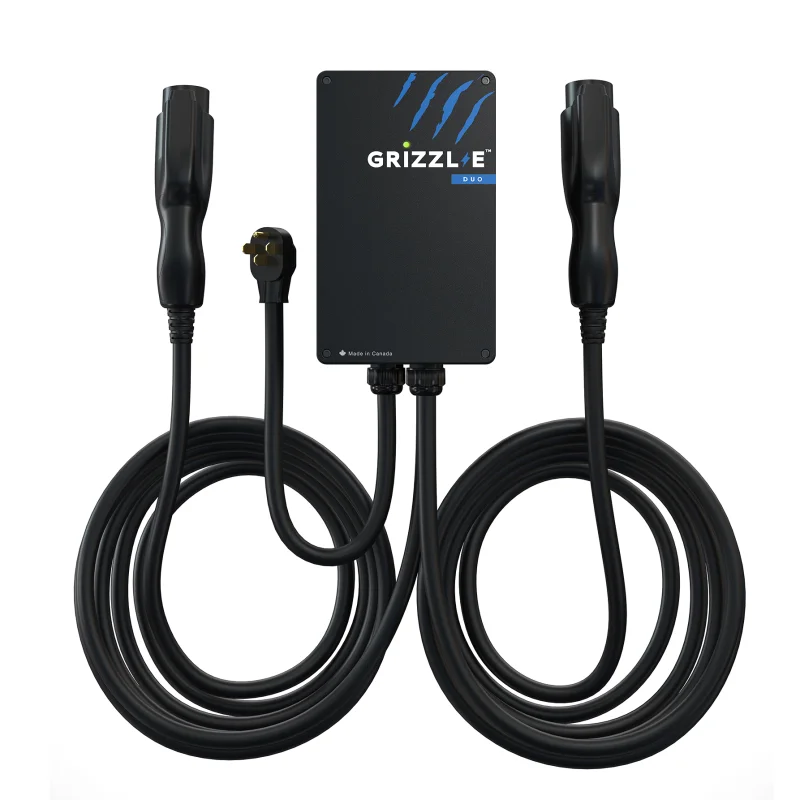
Dual-port 40A ruggedized L2 in one NEMA 4 enclosure — cuts conduit by 50%
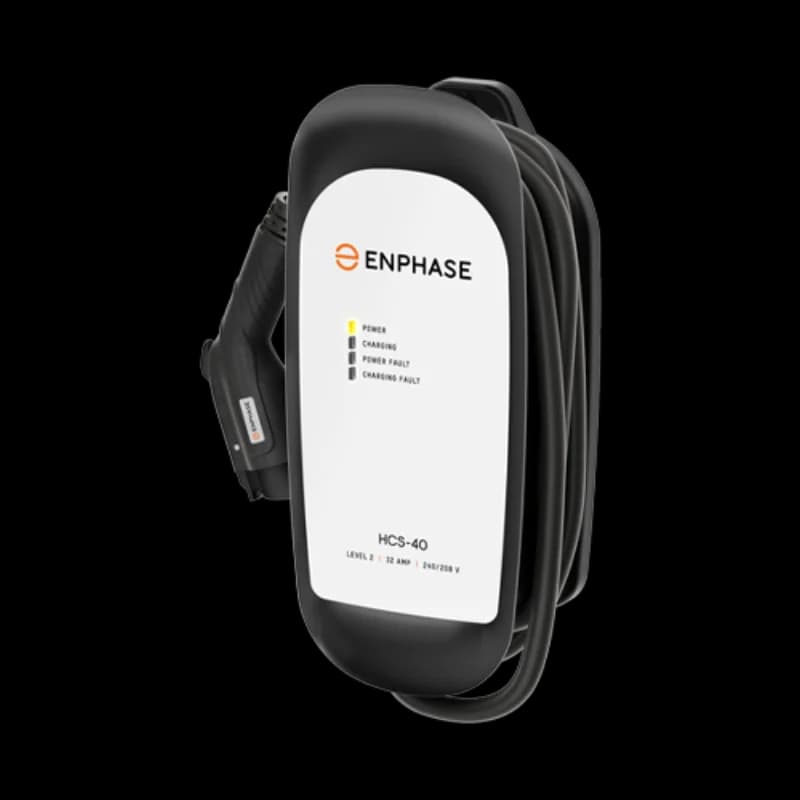
40A hardwired non-networked L2, NEMA 4 — for industrial sites that just want kilowatts
Section 30C was the federal Alternative Fuel Vehicle Refueling Property credit, and it applied to warehouse EV charging with two conditions: the address had to sit inside an IRS-designated low-income or non-urban census tract, and the chargers had to be placed in service by June 30, 2026 — the date the credit expired.
The good news for light industrial is that a very large share of warehouse and distribution park addresses already sit inside qualifying non-urban tracts. Census tracts are drawn on population density, and warehouse parks tend to be sited on the edge of population centers by design.
The credit was 6% of cost without PWA and 30% with full PWA compliance, capped at $100,000 per port, claimed on IRS Form 8911 for the tax year the chargers went live. NuWatt runs the GEOID census tract lookup when substantiating a claim — the credit only holds up if the address qualified at the placed-in-service date.
Expired: Section 30C expired June 30, 2026. Chargers placed in service on or before that date can still be claimed on IRS Form 8911 for that tax year — keep the energization and acceptance-testing records that substantiate the placed-in-service date. Installs placed in service later receive no federal 30C credit; state grants and utility make-ready are now the funding stack.
Three priority state stacks for warehouse and distribution operators. All layer on top of MACRS.
The bundle architecture NuWatt engineers pairs rooftop solar, parking-lot solar canopies, battery storage, and networked L2/DCFC chargers behind a single interconnection.
Solar offsets daytime demand. The battery shifts export into the peak-demand window. Chargers throttle against combined solar-plus-battery headroom through the load controller. The meter never sees a spike.
Most commercial EV installers chase workplace office parks and municipal curbside stations because the scope is clean and the schedule is predictable. Almost nobody specializes in the messy middle.
A warehouse operator with fifteen trucks, thirty employees who charge at work, a Class I forklift fleet burning opportunity chargers all day, and a 480V service sized for the 1998 HVAC load. That is exactly where NuWatt lives.
Our engineering team builds the load study, demand-charge model, battery dispatch schedule, and charger-forklift coordination logic as a single package. One contract. One project manager. One commissioning walkthrough. One warranty covering chargers, battery, solar, and switchgear.
Warehouse EV charging projects typically run $100,000 to $1.5 million per site depending on port count, mix of Level 2 versus DC fast chargers, whether you add battery storage, and how much service upgrade the utility requires. A 10-port Level 2 workplace cluster for employees usually lands in the $150K-$275K range installed, while a mixed car plus forklift plus 150kW DC fast charger with a 250kWh battery peak-shaver can exceed $1M. Demand-charge mitigation hardware and transformer upgrades drive most of the variance.
Yes, with active load management they can share the same service entrance, but you rarely want them on the same branch panel without smart controls. Forklift chargers draw heavy continuous current during shift changes, and stacking unmanaged EV load on top will blow your demand peak. The standard NuWatt approach is a dedicated EV subpanel behind a networked load management controller that throttles car charging when forklift opportunity charging ramps up, protecting your transformer and your demand tier.
Cars plus forklifts plus battery plus solar. One contract. One engineering team. Every live state and utility incentive captured.
IRS Form 8911
Alternative Fuel Vehicle Refueling Property Credit (Section 30C filing reference).
IRS Notice 2024-20
Eligible census tract guidance for Section 30C.
Massachusetts DEP — MassEVIP Fleet
Workplace and fleet Level 2 grant program.
PSE&G EV Charging Program
NJBPU docket EO18101111 — $166M utility program tariff.
Pennsylvania DEP — AFIG
Alternative Fuels Incentive Grant cycle dates and caps.
Texas TCEQ — All-Electric Grant
First-come first-served $109.2M pool through August 31, 2026.
Oncor Drive Forward
Commercial EV rebates in Oncor Texas service territory.
ERCOT 4CP Methodology
Transmission cost allocation via four coincident peak intervals, Jun–Sep.
Last verified by NuWatt Incentive Team on 2026-04-14. This content is informational and not tax advice. Consult your tax advisor and confirm census tract eligibility before relying on Section 30C for a specific project.