Loading NuWatt Energy...
We use your location to provide localized solar offers and incentives.
We serve MA, NH, CT, RI, ME, VT, NJ, PA, and TX
Loading NuWatt Energy...
NuWatt designs, installs, and manages solar, battery, heat pump, and EV charger systems across 9 states. One company, one warranty, one point of contact.
Get a Free Quote
The full Rhode Island playbook — DRIVE EV, Rhode Island Energy rebates, Renewable Energy Fund bundles, G-32 demand-charge strategy, and the federal Section 30C credit — for Providence workplaces, Pawtucket triple-decker multifamily, Newport hospitality, Warwick retail, and state fleet electrification.
RI Energy
Primary utility
~$10–12/kW
RI Energy G-32 demand
~85%
Providence 30C tracts
Jun 30 2026
Section 30C deadline

Rhode Island stacks three incentive layers: DRIVE EV from OER, Rhode Island Energy commercial rebates ($300–$1,500/port) + make-ready, and federal Section 30C (6% or 30% with PWA) for sites inside qualifying Providence, Pawtucket, Central Falls, Woonsocket, or Newport census tracts. RI Energy G-32 demand charges of $10–12/kW make load management non-negotiable.
Rhode Island is the densest state in the NuWatt footprint — 1,000+ people per square mile in the Providence metro — and the commercial EV picture looks nothing like Texas or New Jersey. Five segments drive almost all volume: Providence biotech and insurance workplaces, Pawtucket and Central Falls triple-decker multifamily, Newport and Warwick hospitality and retail, small state and hospital fleets, and highway NEVI DCFC along I-95, I-295, and Route 146. Demand charges matter, permit cycles are short, and every dollar of incentive can be stacked if the project is engineered around the right census tract and the right utility tariff.
Almost every commercial site in Rhode Island is served by Rhode Island Energy, the PPL-owned utility that acquired National Grid's Rhode Island territory in May 2022. A small handful of municipalities — Pascoag Utility District and Block Island Utility District — run their own systems and have separate interconnection processes. Rhode Island Energy's commercial EV charger program combines a per-port rebate with utility-funded make-ready work (conduit, switchgear, and transformer upgrades upstream of the charger), and the most generous tier is unlocked for sites in environmental-justice communities.
At the state level, the Office of Energy Resources administers DRIVE EV, which funds commercial Level 2 and DCFC installations through a first-come-first-served reimbursement structure. Commerce RI's Renewable Energy Fund sits adjacent to this — it funds the solar side of a canopy-plus-EV bundle, which turns an expensive chargers-only project into a self-generation asset that earns SRECs, net-metering credits, and Section 48E ITC. The three dollars you want to layer on any non-trivial RI project are DRIVE EV plus RI Energy plus Section 30C, with REF added any time carport solar is part of the scope.
Section 30C requires the site to sit inside an IRS-designated low-income community or non-urban census tract. In Rhode Island the map is unusually favorable: nearly all of central Providence (Federal Hill, Olneyville, South Providence, Elmwood, Upper and Lower South Providence, West End), the Pawtucket urban core along the Blackstone, Central Falls in its entirety, downtown Woonsocket, and large portions of Newport and Middletown on Aquidneck Island qualify. The two sharp exceptions are the East Side of Providence (Brown/College Hill, Wayland Square) and the southern suburbs — East Greenwich, Barrington, Jamestown — which generally do not qualify. NuWatt runs a GEOID-specific lookup on every prospective address before we finalize the financial model, because one side of a street can qualify and the other side cannot.
A 10-port Level 2 workplace installation operating at 7.2 kW per port hits 72 kW of coincident demand if every vehicle plugs in at 8 AM. On Rhode Island Energy's G-32 tariff (~$11/kW-month), that adds roughly $790 per month — just under $9,500 per year — to the billed demand component, regardless of total kWh consumption. NuWatt designs around that three ways: dynamic load balancing hardware caps aggregate site draw, scheduled charging pushes sessions outside the 2–6 PM coincident-peak window, and — for sites with usable parking — a solar canopy and/or small battery shaves the demand spike. Savings of $4,000–$7,500 per year versus an unmanaged install are typical for a 10-port workplace.
MUD-first load-balancing plus workplace-grade networked L2, with NACS options for Aquidneck Tesla traffic. All four clear Rhode Island Energy and DRIVE EV approved-products screening.
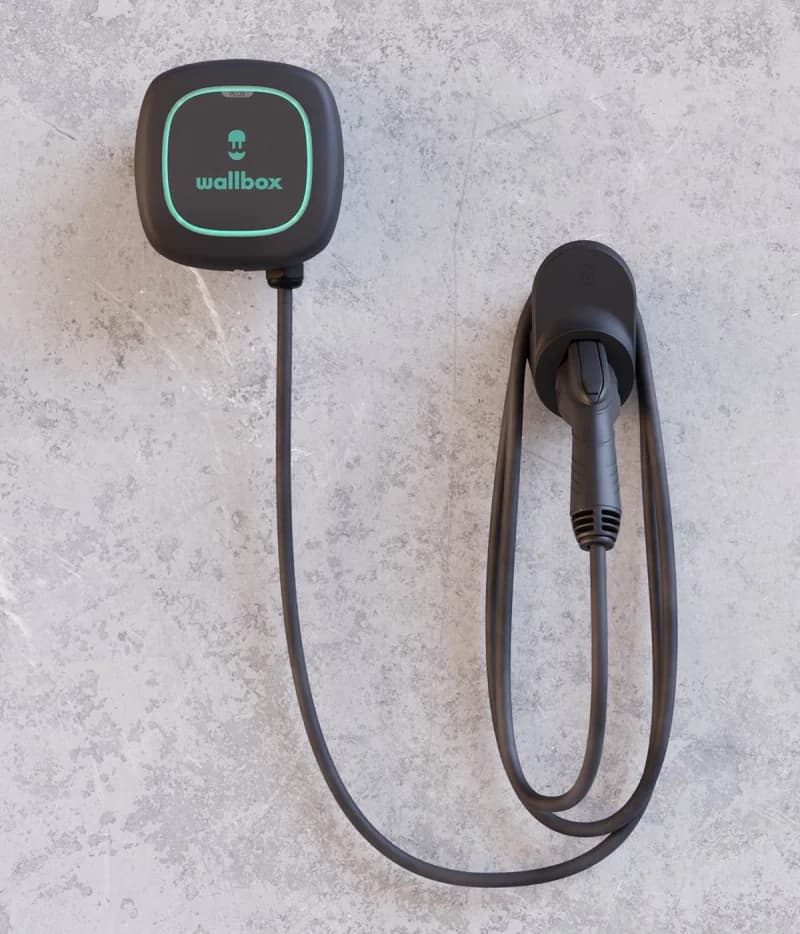
40–48A L2 with dynamic load balancing across 24 ports on a single panel
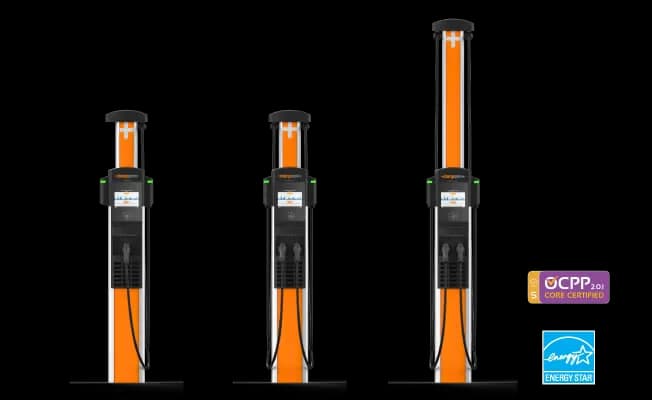
Networked dual-port L2, OCPP, revenue-grade meter — stacks cleanly with RI Energy DRIVE EV
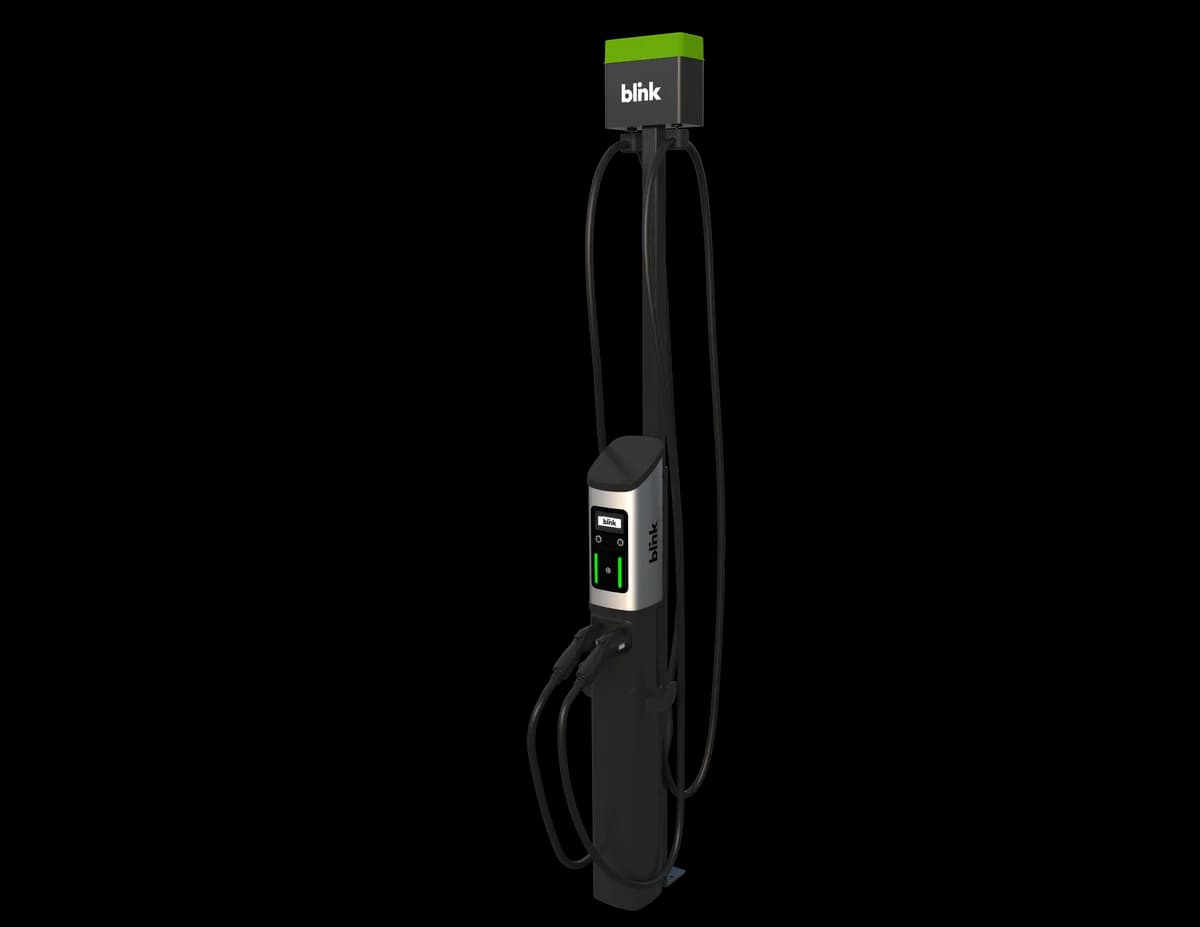
80A L2 destination charging, configurable pay-to-charge pricing with NACS adapter
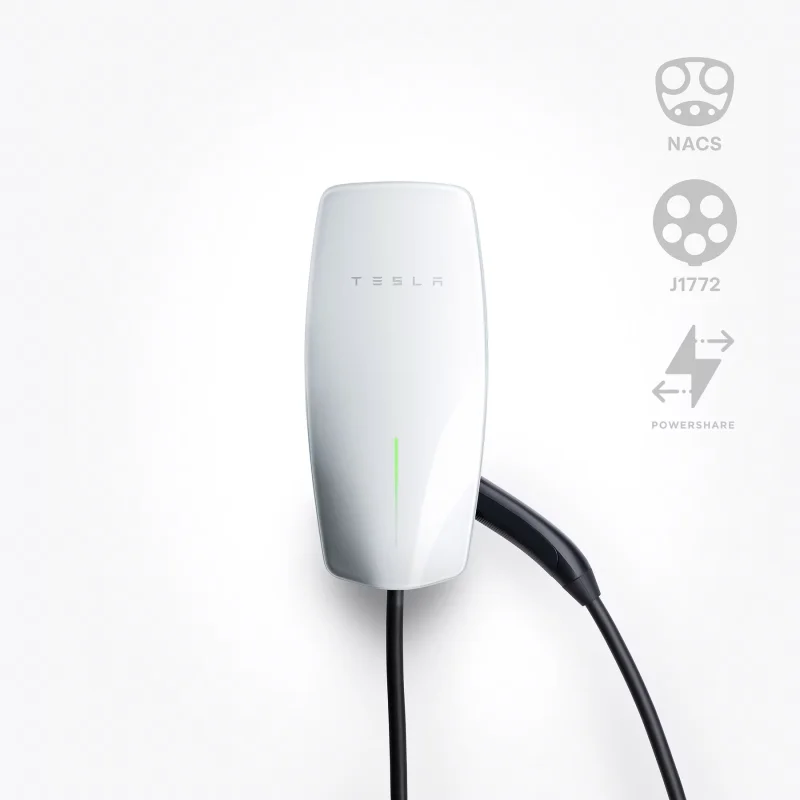
Native NACS plus J1772 adapter, 48A L2 — for destination + retail with Tesla mix above 35%
The right charger count, billing approach, and incentive mix depend on how vehicles actually dwell on your property. Five buckets cover virtually every Rhode Island commercial EV project NuWatt has scoped in the past 24 months:
Rhode Island permitting is generally faster than Massachusetts or Connecticut. Providence, Cranston, Warwick, and Pawtucket all run online electrical permit intake. The bottleneck is almost never the municipal inspector — it is the Rhode Island Energy design letter and, on multifamily sites, the upstream transformer upgrade.
Two site-specific frictions we see repeatedly. First, Newport and parts of historic East Providence and East Side Providence require historic-district or preservation-commission sign-off for any visible pedestal or signage. Add 2–4 weeks. Second, Block Island and Pascoag Utility District sites have their own approval process independent of RI Energy — plan for 60+ day utility approval even on simple L2 sites. For everyone else, typical contract-to-energization is 30–45 days for L2 with no panel upgrade, 60–90 days with panel work, and 90–150 days where a new transformer is required.
Newport, Portsmouth, Middletown, Jamestown, Narragansett, and Westerly sites get NEMA 4X enclosures (stainless or marine-grade aluminum), conformal-coated PCBs, and sealed cable-management so wind-driven salt mist doesn't shorten charger lifespan. Block Island adds a separate utility interconnection process through Block Island Utility District that operates independently of Rhode Island Energy.
Rhode Island Energy — the PPL-owned utility that took over from National Grid RI in 2022 — runs a commercial EV charger incentive layered on top of its make-ready work. Typical per-port rebates land in the $300–$1,500 range for networked Level 2 stations at workplace, multifamily, retail, and fleet sites, with higher-tier make-ready credits for qualifying disadvantaged-community locations. The program stacks with the state DRIVE EV program and Section 30C.
RI Office of Energy Resources — DRIVE EV
State commercial EV charger incentive program design and application windows.
Rhode Island Energy — Electric Vehicle programs
Commercial EV charger rebate documentation plus make-ready coordination for PPL-owned RI Energy.
Commerce RI — Renewable Energy Fund (REF)
Commercial grants for solar carports paired with EV charging (bundle-eligible tier).
IRS Form 8911 & Section 30C
Alternative Fuel Vehicle Refueling Property Credit — 2026 filing instructions and PWA rules.
RI PUC Tariff Filings — Large Demand (G-32)
Current Rhode Island Energy commercial demand-charge schedule and rider structure.
Argonne National Lab — 30C Eligible Census Tract Map
Official GEOID lookup for low-income and non-urban tracts that qualify for the Section 30C credit.
RI Department of Transportation — NEVI Plan
Rhode Island NEVI DCFC corridor plan for I-95, I-295, and Route 146 fast-charging sites.
Last verified by NuWatt Engineering Team on 2026-04-14. Incentive program terms change frequently — confirm current availability with Rhode Island Energy and OER before signing a proposal.
NuWatt handles site assessment, Rhode Island Energy make-ready coordination, DRIVE EV and REF applications, Section 30C census-tract verification and PWA compliance, and turnkey install. Federal 30C deadline is June 30, 2026.